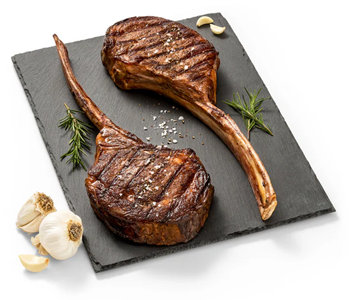
The Porterhouse is one of those cuts of steak that’s bigger than life. You might not eat it all in one sitting, but that just means you can enjoy one of the many ways of reusing steak leftovers. It’s similar to the T-bone steak but contains more of the delicious Tenderloin area and only a small amount of Strip steak. It’s popular at steakhouses around the world and makes a big impact when served to guests for a special dinner. Most people find it quite tender and juicy, especially when cooked on the grill or with a sous vide method.
Porterhouse Grades
USDA Prime steak is always going to offer you the best dining experience. The Porterhouse may not live up to your expectations if it’s only a USDA Select graded product. Aside from the USDA grade, consider the breed of the beef since it plays a large role in both flavor and texture.
Premium Angus Porterhouse
Angus cows first became popular in Scotland when farmers realized the sturdy beasts were packing much more marbled fat into their meat. Now you can enjoy American-raised Angus beef with all the flavor and texture you expect from the breed.
USDA Wet Aged Porterhouse
Each wet aged steak is sealed in its natural juices for months, resulting in a flavor that can only be described as pure beef. It also improves the texture without making the meat fibers too soft.
USDA Dry Aged Porterhouse
A dry aged Porterhouse is a true experience. Diners praise the unique flavor that’s different from any other kind of steak. It develops slowly as the meat is aged and exposed to chilled age, resulting in a texture that’s denser than the wet aged steak.
Wagyu Porterhouse
Wagyu comes from breeds of cows that originated in Japan. The beef is some of the most highly marbled meat available for a soft texture that practically melts in your mouth.
How to Cook Porterhouse Guides
Whipping up a great Porterhouse steak isn’t hard because the cut features enough Tenderloin to stay tender no matter how you cook it. Try one of these easy methods that makes the most of the beef’s rich flavor.
Porterhouse Recipes
The Porterhouse might stand out all on its own, but there’s nothing wrong with some seasonings or toppings to dress it up even further. Make sure you’re choosing side dishes that bring out the best of the steak as well.
Porterhouse FAQ's
What 2 steaks make up the Porterhouse?
Just like the T-bone, the Porterhouse contains both Tenderloin and Strip steaks combined into one cut.
What’s different about the Porterhouse and T-bone?
T-bones come from the front section of the short loin, while the Porterhouse are cut from the rear.
Is the Porterhouse more than one serving?
Most people struggle to finish an entire Porterhouse in one meal with side dishes. It’s great for saving to use in dishes like steak sandwiches or tacos.
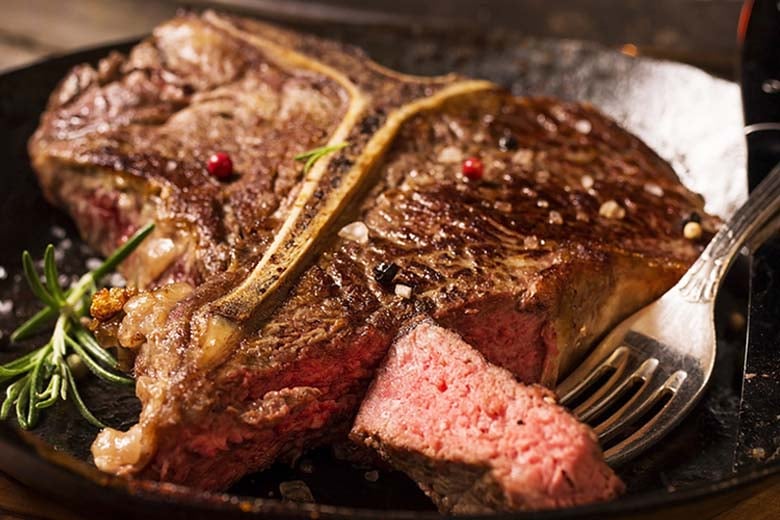
The T-bone is one of those plate-filling steaks that comes to mind when you hear the word beef. It’s almost always a bone-in cut that is named for the large T-shaped bone running down the middle of each piece. The steak is cut from the entire short loin section, which is deep inside the body and not exercised too much. Two different muscle groups are included. Both sections are highly marbled with fat, but there isn’t too much solid fat to interrupt your enjoyment. It’s a well-rounded steak that can work equally well as a celebratory or regular meal.
T-Bone Grades
Since you get both Tenderloin and Strip Steak in one cut with the T-bone, you’ll definitely want to splurge on a higher grade of beef. Look for USDA Prime ratings and some of the specialty categories listed below.
Premium Angus T-Bone
Angus beef may have originated in Scotland, but today’s American Angus is every bit as well-marbled and richly flavored as the original breed. It’s ideal for the T-bone since this breed offers better marbling than many other types of cattle.
USDA Wet Aged T-Bone
Sealing your steaks in a vacuum package allows them to wet age in their own juices. This intensifies the natural flavoring without changing it, providing a more tender T-bone as well.
USDA Dry Aged T-Bone
Dry aging involves air circulation and cooling. The result is a slightly drier and denser steak that has an unmistakable umami flavor some people describe as earthy or nutty.
Wagyu T-Bone
If you’re a fan of Japanese beef, you need to have a genuine Wagyu T-bone experience. The Wagyu breeds are considered to provide the most well-marbled steaks of all. Of course, it’s up to you to be the judge.
How to Cook T-Bone Guides
The T-bone is a hearty cut that won’t easily dry out if you want to put it in the smoker or cook it in the oven. Yet it also responds well to a short trip to the grill or a hot cast iron pan as well. Choose a cooking method based on the weather and what equipment you have in the kitchen.
T-Bone Recipes
This cut of beef stands alone with just salt and pepper for seasoning. If you’re ready to put a twist on your usual steak routine, try these recipes that are tailor-made for T-bone.
T-Bone FAQ's
Is the T-Bone steak better than a Ribeye?
It’s largely personal preference, but the extra marbling and combination of two distinct muscle groups can make the T-bone more enjoyable to some.
How can you tenderize a T-bone steak?
Pounding with a meat mallet can work, but the large central bone makes that tricky. Try using a tenderizing powder or marinade.
Can you marinate a T-bone steak?
It’s not necessary since this is a relatively tender cut of beef, but it can add extra flavor.