
What Is Beef Tallow? The Complete Guide

Walk into almost any butcher shop or scroll through any cooking video right now, and you will run into beef tallow. Chefs are frying in it. Skincare brands are bottling it. Even fast food chains are bringing it back to the fryer. But if you grew up cooking with olive oil and butter, beef tallow might still feel like a mystery ingredient from your grandmother's kitchen.
It is not new. It is one of the oldest cooking fats in human history, and it never actually left. It just went out of style for a few decades. Now it is back, and for good reason. This guide breaks down exactly what beef tallow is, how it is made, what it does in the kitchen and on your skin, and how it stacks up against the fats you already know.
Understanding Beef Tallow
Beef tallow is rendered fat from cattle. "Rendered" simply means the fat has been melted down slowly, strained to remove any leftover meat or connective tissue, and cooled back into a solid. The result is a smooth, creamy white to pale yellow fat that looks a lot like solid coconut oil or lard, the same rendered fat made from pork.
Tallow is typically made from suet, the firm fat found around a cow's kidneys and loins. Suet has a higher melting point and cleaner flavor than the fat trimmed from muscle cuts, which is why it has been the traditional choice for tallow production for centuries.
Physical Properties
At room temperature, beef tallow is solid and slightly waxy, similar in texture to shortening. It softens as it warms and melts completely into a clear liquid around 100°F, well below body temperature. Once melted, it pours easily and has almost no smell or flavor of its own, which is part of why cooks like it. It will not overpower a dish the way some people assume an animal fat might.
Compared to butter, tallow is firmer at room temperature and does not contain any milk solids or water, which is why it does not spatter or burn as easily in a hot pan.
Chemical Composition
Tallow is mostly saturated and monounsaturated fat, with only a small amount of polyunsaturated fat. A typical breakdown per tablespoon looks like this:
- Calories: about 115
- Total fat: about 12.8 grams
- Saturated fat: about 6.4 grams
- Monounsaturated fat: about 5.4 grams
- Polyunsaturated fat: about 0.5 grams
- Cholesterol: about 14 milligrams
That mix of roughly half saturated and half monounsaturated fat is one reason tallow behaves so well under heat. Saturated and monounsaturated fats are more chemically stable than polyunsaturated fats, meaning they resist breaking down and forming harmful compounds when heated, which is exactly what you want in a cooking fat.
The Resurgence of Beef Tallow
For most of the 20th century, beef tallow was a kitchen staple. It fried the fast food fries you grew up loving, seasoned cast iron skillets in home kitchens, and showed up in everything from pie crusts to popcorn. That started to change in the 1980s, when public health campaigns targeted saturated fat as a leading cause of heart disease. By around 1990, pressure from consumer health groups pushed major chains, McDonald's included, to switch from beef tallow to vegetable oil.
The irony is that many of those replacement oils were partially hydrogenated to mimic tallow's stability, which created artificial trans fats. Those trans fats turned out to be far more harmful than the saturated fat they replaced, and the FDA eventually ordered them out of the food supply entirely.
Fast forward to today, and beef tallow is back on the menu, both literally and figuratively. A few forces are driving the comeback:
Sustainable and Eco-Friendly
Tallow makes use of a part of the animal that might otherwise go to waste. For cooks and brands focused on nose-to-tail eating and reducing food waste, rendering suet into tallow is a practical, low-waste choice that turns a byproduct into a genuinely useful ingredient.
Market Growth
Consumer interest in "ancestral" and minimally processed foods has fueled steady growth in tallow sales, both for cooking and skincare. Specialty butchers, farmers markets, and online retailers have expanded their tallow offerings in response, and the ingredient has become a fixture in conversations about seed oil alternatives, including from public health figures promoting a return to traditional animal fats. Grocery chains that once carried a single tub of shortening in the baking aisle now regularly stock jarred tallow next to olive oil and butter, and several fast food chains have publicly experimented with bringing tallow back to the fryer.
How to Render Beef Tallow at Home
One of the easiest ways to get high-quality tallow is to render it yourself from beef fat trimmings, which you can often get for free or very cheap from a butcher counter. Here is the basic process:
- Get your fat. Ask your butcher for beef fat trimmings or suet, or save trimmings from well-marbled ribeye and prime rib cuts in the freezer until you have a few pounds.
- Cut it small. Chop or grind the fat into small, roughly uniform pieces so it melts evenly and faster.
- Melt it low and slow. Place the fat in a heavy pot with a splash of water to prevent scorching, and heat it on low for two to four hours, stirring occasionally.
- Strain it. Once the fat has fully melted and the solids (cracklings) have turned golden brown and floated to the surface, strain the liquid through a fine mesh strainer or cheesecloth into a clean container.
- Cool and store. Let the tallow cool at room temperature until it solidifies, then store it in an airtight container. It will keep for months at room temperature, or longer in the fridge or freezer.

Homemade tallow tends to have a cleaner, milder flavor than some store-bought versions, and rendering it yourself lets you control exactly what goes into the pot, which matters if you are sourcing grass-fed beef fat.
Uses of Beef Tallow in Cooking
Beef tallow's biggest advantage in the kitchen is stability at high heat. It holds up beautifully to searing, roasting, and deep frying without breaking down or smoking the way many vegetable oils do at the same temperatures.
Frying and Baking
Tallow's high smoke point, generally in the 400°F range or higher for well-filtered, high-quality tallow, makes it a favorite for deep frying. French fries, fried chicken, and doughnuts all fried in tallow historically, and many cooks say the crisp texture and clean finish are hard to match with vegetable oil. In baking, tallow can substitute for shortening or lard in pie crusts and biscuits, producing a flaky texture with a subtly savory undertone.
Flavor Boosts
Because tallow comes from beef fat, it carries a faint, savory richness that pairs naturally with red meat. Searing a steak in a spoonful of tallow, or basting a roast with it, adds depth without introducing any competing flavors the way some infused oils do. It also works well for roasting vegetables, especially root vegetables like potatoes, which pick up a deep, savory crust.
Quick idea: Tallow-crisped potatoes. Toss cubed potatoes with a tablespoon or two of melted tallow, salt, and pepper, then roast at 425°F until deeply golden and crisp on the outside. The high smoke point means the potatoes brown fast without the fat burning, and the result is noticeably crispier than the same potatoes roasted in olive oil.
Beef Tallow in Skincare
One of the more surprising parts of the tallow comeback is its use in lotions, balms, and soaps. The idea is not new. Tallow-based soap and salves have been used for generations, especially before synthetic moisturizers became widely available.
Biocompatibility and Benefits
Tallow contains fatty acids and small amounts of vitamins A, D, E, and K, and its fat structure is often compared to the natural oils your skin already produces. Fans of tallow balm say this similarity helps it absorb well and soothe very dry or cracked skin, particularly on hands, elbows, and other rough patches.
Dermatologists are split on it. Some acknowledge it can work as an intense moisturizer for extremely dry skin. Others point out real drawbacks: tallow can clog pores, it lacks the ceramides found in clinically tested moisturizers, and its quality varies widely depending on how it was rendered and what the animal was fed. The general professional advice is to avoid using it on your face if you are prone to acne or breakouts, patch test before using it anywhere new, and stick to research-backed moisturizers if you have sensitive or oily skin.
Product Guide
If you want to try tallow in your skincare routine, look for products made from grass-fed, well-filtered tallow with no added fragrance, and start with a small area like your hands or elbows rather than your face. A simple do-it-yourself balm can be made in a few steps: melt a small amount of rendered tallow, whisk in a lightweight carrier oil like jojoba until fully combined, let the mixture cool until it firms up slightly, then whip it with a hand mixer until light and fluffy. Store it in a sealed jar at room temperature and always patch test first, stopping use if you notice any irritation or breakouts.
Comparing Beef Tallow to Other Fats
Tallow is often compared to olive oil, since the two sit on opposite ends of the "traditional cooking fat" conversation, and to lard, its closest animal-fat cousin. Here is how they stack up.
| Fat (1 tbsp) | Calories | Total Fat | Saturated Fat | Monounsaturated Fat | Smoke Point |
|---|---|---|---|---|---|
| Beef tallow | 115 | 12.8g | 6.4g | 5.4g | ~400°F |
| Lard | 115 | 12.8g | 5.0g | 5.8g | ~370-400°F |
| Extra virgin olive oil | 119 | 13.5g | 1.9g | 9.9g | ~375-400°F |
| Butter (salted) | 102 | 11.5g | 7.3g | 3.0g | ~300-350°F |
Values are approximate, based on USDA FoodData Central averages and commonly cited culinary references. Smoke points vary based on how a fat was rendered and filtered.

Nutritional Comparisons
Calorie-wise, all four fats land in a similar range, which makes sense since fat has roughly 9 calories per gram no matter the source. The real difference is in the type of fat. Olive oil is dominated by monounsaturated fat, the kind most consistently linked to heart health benefits in research. Tallow and butter lean more heavily saturated, while lard actually splits closer to even between saturated and monounsaturated fat.
Cooking and Taste
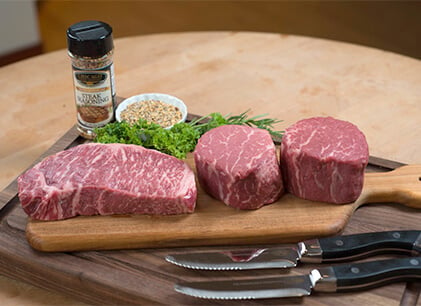
In terms of performance, tallow and lard both handle high heat better than butter, which burns quickly once its milk solids hit a hot pan. Olive oil, especially extra virgin, has a lower smoke point than many people assume and is often better saved for finishing dishes or medium-heat cooking rather than deep frying. Flavor-wise, tallow adds a savory, beefy undertone, lard is closer to neutral, butter brings richness, and olive oil brings its own distinct fruity or peppery notes depending on the variety. A lot of that richness in beef fat comes down to marbling, the same quality that makes a well-marbled steak worth seeking out in the first place.
The Future of Beef Tallow
Market Prospects
Interest in tallow shows little sign of slowing down. As more home cooks look for alternatives to heavily processed vegetable and seed oils, and as sustainability-minded shoppers look for ways to use more of the animal, tallow is positioned to keep growing in specialty grocery stores, butcher counters, and skincare aisles alike.
Research and Development
Expect to see more product innovation around tallow, from shelf-stable cooking blends to skincare lines that pair it with better-studied ingredients to offset some of its drawbacks. The science on tallow's health effects is still catching up to its popularity, so it is worth watching for updated guidance as more research comes out.
Frequently Asked Questions
Is beef tallow good or bad for you?
It depends on how much and how often you use it. Beef tallow is high in saturated fat, so most nutrition experts recommend using it in moderation as part of a varied diet rather than as your everyday cooking fat. It is not inherently dangerous in normal culinary amounts, but it should not replace all the unsaturated fats in your diet either.
Why did people stop using beef tallow?
Starting in the 1980s, health campaigns focused on saturated fat as a driver of heart disease, and by around 1990 most major food companies, including fast food chains, had switched from beef tallow to vegetable oils. Tallow never disappeared completely, but it fell out of everyday use for a couple of decades.
Why don't dermatologists like beef tallow?
The main concerns are that it can clog pores, especially on the face, and that it has not gone through the kind of clinical testing that modern moisturizers have. Some dermatologists see a place for it as a body moisturizer for very dry skin, but most recommend caution for anyone with acne-prone or sensitive skin.
Is beef tallow the same as lard?
No. Tallow comes from rendered beef fat, usually suet, while lard comes from rendered pork fat. They behave similarly in the kitchen and have comparable calorie counts, but tallow tends to be firmer at room temperature and carries a slightly beefier flavor, while lard is closer to neutral.
Where can you buy beef tallow?
Beef tallow is increasingly available at grocery stores near the cooking oils or specialty foods, at butcher shops, and through online retailers that focus on grass-fed and pasture-raised products. Many butchers will also sell or give away raw beef fat trimmings if you want to render your own at home.
What is beef tallow used for besides cooking and skincare?
Historically, tallow was also used to make candles, soap, and leather conditioner, and it remains a traditional ingredient in some soap and candle making today. Its high melting point and stability made it useful well beyond the kitchen long before refrigeration and modern preservatives existed.
Bringing It Back to the Kitchen
Beef tallow earned its place in kitchens for generations before it fell out of fashion, and it is earning that place back for good reason. It fries cleaner, sears hotter, and uses more of the animal than oils that come from a bottle. Whether you are rendering your own from beef fat trimmings or picking up a jar at the store, tallow is worth keeping in your kitchen alongside your usual go-to oils.
If you are searing a steak tonight, a spoonful of beef tallow in a hot cast iron pan is one of the simplest ways to get a deep, even crust. Pair it with a quality cut from Chicago Steak Company and you will taste exactly why this old-school fat has made such a comeback.



Leave a comment
This site is protected by hCaptcha and the hCaptcha Privacy Policy and Terms of Service apply.