




How to slow-roast prime rib
Our guide to a slow-roasted prime rib for the holiday table.

Skirt steak mimics other long, thin cuts of steak, like flank steak, in looks, but this cut deserves the attention that it doesn’t usually get. Skirt steak is less well-known than some other seemingly more decadent cuts, but it’s definitely one you should know about if you like marinating steak and making creative steak dishes.
Cooking skirt steak takes a little more care than other cuts because its fibrous texture could get tough when things go wrong. However, this guide walks you through the most common cooking methods for skirt steak, so that you can whip up steak salads and fajitas in no time.
Skirt steak, hanger steak, flank steak — they all look relatively similar at first glance and are even used for similar purposes, so what’s the difference between them? Take a closer look at the skirt steak and you’ll notice one visible difference right off the bat: its very prominent grain. Skirt steak has long muscle fibers running through it, and it’s easy to spot them. Those fibers are so visible because skirt steak comes from the area right under the ribs, which is full of muscle.
While the origin of the name “skirt steak” remains unknown, the cut has been used for generations, especially in Hispanic cultures. Today, skirt steaks are more popular with commercial and restaurant buyers than with the general population.
The skirt steak comes from the plate section of a cow, located in the abdominal area underneath the ribs. This area is muscled and fibrous, which is why skirt steak can be tough if not cooked properly.
Skirt steak comes in two portions, the inside skirt and the outer skirt. The inside skirt steak tends to be a little tougher, as it comes from the abdominal area. The outer skirt steak is usually more tender because it’s from the diaphragm and yields a thicker cut.
There isn’t much skirt steak from one animal to go around. Butchers only get one inside skirt and one outside skirt from a cow, so the price of skirt steak can be steep, especially for consumers who don’t buy it on the mass market.
Skirt steak and flank steak are often mistaken for each other, and it’s easy to see why. Both are long, lean cuts with visible grain and bold, beefy flavor. But there are a few key differences that set them apart.
Skirt steak comes from the plate section of the cow, while flank steak is cut from the lower abdominal area. Skirt steak tends to be thinner, longer, and has a more pronounced grain, which helps it soak up marinades and cook quickly. It’s also a bit more fibrous, meaning it can get chewy if overcooked. Flank steak, while still lean, is slightly thicker and often a little more tender when sliced correctly.
Because of its quick-cooking nature, skirt steak is a go-to for fajitas, stir-fries, and steak tacos. Flank steak is a popular choice for stuffed steak recipes, steak pinwheels, or slicing into strips for steak salads and grain bowls.
When buying skirt steak, you’ll likely have the option between inside and outside skirt. If you can find it, opt for the outside skirt. It’s thicker, wider, and generally more tender than the inside cut. Outside skirt comes from the diaphragm muscle and has a looser grain, which makes it easier to cook evenly and slice after grilling or searing. The inside skirt is a bit thinner and narrower with more connective tissue, so it can turn chewy if overcooked or not sliced properly.
Both cuts benefit from a good marinade and high-heat cooking method. If your butcher doesn’t specify which one they’re selling, just ask. A knowledgeable butcher will be able to point you to the best skirt steak for your recipe.
More important, perhaps, is the overall health of the skirt steak cut. Look for a cut that’s deep red with minimal gray spots or discoloration. The meat should feel firm to the touch, with visible marbling running throughout — just enough fat to add flavor without being overly fatty. Avoid skirt steaks that look really wet or have a strong odor, which can indicate poor quality.
Skirt steak is a flavorful, versatile cut that shines in dishes where bold taste and quick cooking matter. Thanks to its thin profile and strong grain, it soaks up marinades well and cooks fast, making it a favorite for weeknight meals and grilled favorites. Here are a few of the best ways to use skirt steak:
Season skirt steak lightly with salt and pepper before cooking. If you’d like a more intense flavor, season with your favorite steak seasoning. Or, add a dry rub on all sides of the steak before pan-searing or grilling. Spices like smoked paprika, garlic powder, onion powder, and ground mustard also pair well with skirt steak.
Skirt steak is a favorite for marinating because it soaks up flavors well, and the right marinade can keep it tender rather than tough. For a simple marinade, combine ½ cup soy sauce, ½ cup balsamic vinegar, ⅓ cup olive oil, 1 tbsp brown sugar, 1 tbsp Worcestershire sauce, 1 tsp garlic powder, 1 tsp thyme, 1 tsp oregano, and 1 tsp steak seasoning in a bowl.
Then, place steaks in a sealable bag and top with marinade. Close the bag and leave it in the refrigerator for at least 3-4 hours, or preferably overnight. Be sure to lay the bag flat to cover the steak in the marinade.
Skirt steak is thinner than other steaks you might be used to cooking, like ribeye and strip steak. Still, you can cook it using the same methods; just be sure to keep a close eye on it to avoid overcooking.
Before cooking skirt steak, be sure to season with salt on all sides and leave at room temperature for about 45 minutes, allowing a natural brine to form for crispier edges.
Skirt steak is ideal for grilling thanks to its thin shape and ability to take on char quickly without drying out. You can use a gas or charcoal grill; either way, high heat and quick cooking are key to keeping this cut juicy and flavorful.
Because skirt steak is relatively thin, you don't typically cut it into chunks like you would if you were skewering other cuts of beef. Instead, slice the steak into thin strips along the grain. Marinate if desired. Then, thread each piece of steak lengthwise onto the skewers. Grill over high heat for about 3-4 minutes; turn once to the other side, and grill for another 3-4 minutes. Let rest for 5 minutes before serving.
The best way to slice skirt steak is to cut it thinly against the grain. Skirt steak has long, visible muscle fibers, and cutting across them shortens those fibers, making each bite more tender and easier to chew.
First, locate the direction of the grain, then turn the steak and slice perpendicular to those lines. Aim for slices about ¼ inch thick. This technique is especially important if your steak is cooked past medium-rare, when it can become tougher and may need some extra help to tenderize.
Skirt steak is one of the quickest to cook because of its thin profile. Expect the following cooking times for each method:
Knowing cooking times can help you prepare to cook skirt steak, but it’s best to know how to check that your steak is done instead of just relying on time. That happens by using a thermometer. Use a digital meat thermometer to check the thickest part of the steak. For medium-rare, you’ll want it to reach 125-130 degrees before pulling it from the heat. Your steak will cook a little more as it rests to reach its full doneness level. Add five more degrees for each level of doneness (remove from heat at 130-135 degrees for medium, for example).
Skirt steak is a thin cut that’s not typically found in your local supermarket. However, your butcher likely has some in stock. But, expect to pay a bit for it, as there’s not much skirt steak from each animal to go around. When cooking at home, remember to stay vigilant to avoid overcooking. This quick-to-cook cut can get overdone fast if you’re not careful.
Want some at-home cooking inspiration for skirt steak? Try our Grilled Thai Coconut-Lime Skirt Steak recipe or our Fresh Garlic Cilantro Steak Sauce recipe, which is perfect for elevating skirt steak to the next level.
2 people
45 minutes
15 minutes
Main Course
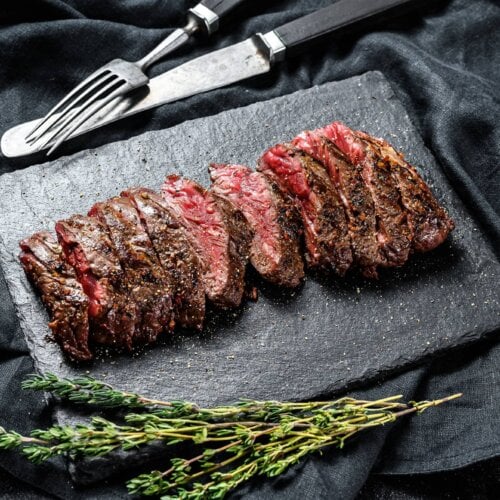
Rub salt into all sides of the skirt steaks. Rest at room temperature for 45 minutes.
Preheat a cast-iron skillet with olive oil over medium-high heat.
Sprinkle pepper on steaks before adding them to the pan. Sear for about 2-3 minutes on each side until golden brown.
Turn heat to low. Add the minced garlic to the pan. Spoon garlic and olive oil over the steaks, cooking for another 1-2 minutes until garlic becomes aromatic. Check that the internal temperature is 125-130 degrees for medium-rare.
Remove steaks from heat and place on a plate tented with foil for 5-10 minutes before serving. If desired, slice steaks against the grain.


Our guide to a slow-roasted prime rib for the holiday table.
Our guide to baking a ham for Christmas dinner.


Leave a comment
This site is protected by hCaptcha and the hCaptcha Privacy Policy and Terms of Service apply.