


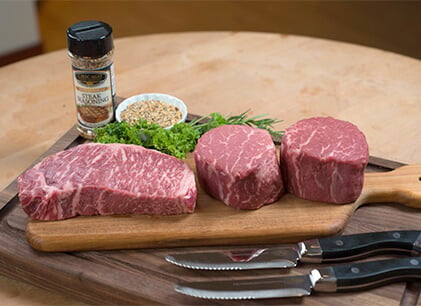

How to slow-roast prime rib
Our guide to a slow-roasted prime rib for the holiday table.

A perfectly cooked steak is one of the best treats to make its way from your kitchen to the table. Richly caramelized crust and a juicy, tender center make for the ideal steak that you want to enjoy over and over again. Traditionally, grills and pans have been the go-to tools for cooking steak. They certainly do a good job, but the Blackstone griddle could be a game-changer for your future steak cooks.
Learn how to cook steak on a Blackstone griddle and why one of these cooking surfaces might become one of your favorite kitchen gadgets.
If you've been exploring ways to elevate your steak game at home, you've likely encountered the Blackstone griddle — a flat-top cooking surface that's become increasingly popular among serious meat enthusiasts. We’ve personally used dozens of cooking methods over our years in the premium steak industry to cook steak and other meats, but we've found that the Blackstone offers a unique cooking experience that delivers restaurant-quality results.
The Blackstone distinguishes itself with a solid steel cooking surface instead of traditional grill grates. This design creates complete contact between your steak and the cooking surface, allowing for an exceptional sear that locks in juices and enhances flavor development. The even heat distribution eliminates the frustration of hot spots that can lead to inconsistent cooking. This tends to happen on the grill and in the oven, for example.
We usually find that a flat cooking surface excels at creating that professional-quality crust that's often difficult to achieve with conventional grills. For steak lovers looking to recreate a steakhouse experience at home, the Blackstone represents one of the most effective tools in your outdoor cooking collection.
It’s easy to see all the benefits a Blackstone griddle offers home cooks once you’ve started using one. But if you’re still weighing your options, here are the pros you need to know:
The Blackstone's solid steel cooking surface comes into complete contact with your steak to give it an excellent sear that’s tough to get on traditional grill grates. This full-surface contact allows the flavorful, caramelized crust to develop across the entire cut. The result is a steak with exceptional flavor, a satisfying bite, and a crust that locks in those juices.
When cooking on a Blackstone, you'll notice significantly less juice loss compared to grilling over grates. The flat surface prevents those flavorful drippings from falling into the flames, so you’ll keep your steak moist and tender. Steaks can soak up the juices they lose during cooking using a Blackstone griddle, allowing them to maintain their rich beef flavor and tender bite.
The Blackstone griddle distributes heat evenly across its cooking surface, eliminating hot spots that can lead to uneven cooking. This consistency means you can reproduce steakhouse-quality results reliably, even with different cuts or thicknesses. That’s especially helpful for steaks that tend to be thicker on one end than the other, like the T-bone, which includes two steaks of different thicknesses on either side of the bone.
Unlike many griddles, a Blackstone griddle has multiple temperature zones, similar to your stove. This allows you to work with low-heat and high-heat zones to get the perfect sear and cook your steak to your preferred doneness.
The Blackstone allows you to prepare an entire meal simultaneously if you want to cook other ingredients along with your steak. Use it to sauté mushrooms, caramelize onions, or roast vegetables right alongside your steaks. This allows your foods to soak up flavors from each other for a cohesive meal. Plus, it saves you a lot of cooking and cleaning time when you can use just one surface to cook.
Almost any premium cut of steak can work with a flat-top surface like the Blackstone griddle. But there are a few steak cuts that really shine when cooked this way. Here are some top performers that deserve a spot on your Blackstone griddle.
Ribeye is one of the fattier cuts of steak that can lead to problems on the grill for inexperienced cooks. When its fat drips into the grill, it can cause dangerous flare-ups. That’s not an issue for griddle cooking, which keeps all juices contained on the surface and allows the ribeye to soak them back up. The flat surface also allows the fat to render evenly and distribute its flavors throughout the meat.
We’re going to lump together T-bone and porterhouse because they’re essentially the same cut, with porterhouse being a bigger version. These cuts have two different types of steak on each side of the bone, and they cook a bit differently. That’s why these steaks are perfect for the Blackstone griddle. The flat surface ensures consistent contact with both sides to curb the common issue of uneven cooking.
Sirloin is lean by nature, so it can easily become tough and chewy if not cooked with care. But using the Blackstone griddle can eliminate that problem. Its lack of grates prevents moisture loss from the sirloin, instead letting this lean cut soak up its own juices when cooking. This can yield a more flavorful and tender steak.
Flat iron has rich marbling and a uniform thickness that make it a good pick for griddle cooking. You only need a quick sear and a few minutes of additional cooking for a medium-rare flat iron. The Blackstone griddle’s even heating makes this already speedy process even quicker while maintaining the rich beefy flavor of flat iron.
Flank steak also performs well on a Blackstone griddle. The long, flat cut is one of the best for high-heat cooking because of its thinness. Griddle cooking gives it a smooth surface with even contact, so it sears nicely outside without overcooking inside. For best results, cook flank steak to medium-rare on the griddle.
You don’t need to be a master chef to cook a steak on a Blackstone griddle successfully. These tips will help you get restaurant-quality steaks every time you fire up the griddle:
Using a Blackstone griddle to cook steak is relatively straightforward once you get the hang of it. But as you get used to this new cooking tool, you might experience a common error or two.
One of the easiest steaks to make is improper heating and seasoning of the griddle. Blackstone griddles need a good 15-20 minutes of preheating to come to the perfect temp for searing. Any less, and you may end up with stuck food that doesn’t sear properly. These griddles also need a good seasoning in between uses to keep food from sticking. Before seasoning your Blackstone griddle, clean and dry it completely. Then, heat the griddle for 15-20 minutes. Turn off the griddle and allow it to cool slightly. While still warm, apply a light layer of Blackstone’s conditioner or extra virgin olive oil to the surface.
Another common error is overcrowding the surface. If you’re cooking for a lot of people, you might want to add a bunch of steaks at one time to the griddle. But this can cause lots of smoke and steam, which prevents the steaks from searing. Make sure each steak has plenty of room around it for even cooking.
Finally, don’t press down on your steaks with a spatula when cooking. You might think that doing this can help the steaks sear, but the Blackstone griddle already does this on its own with its flat, even-contact cooking surface. Pressing on the steaks can actually release the juices you want to keep within the meat for flavor and moisture.
Ready to start cooking on your Blackstone griddle? Follow this recipe to have a delicious steak ready in less than 30 minutes of cooking time.
If desired, add a tablespoon of compound butter to the top of the steak while it rests. The butter will melt to give the steak a creamy, savory finish.
Cleaning and maintaining your Blackstone griddle properly will keep it in its best shape for continued steak cooking.
After each use, soap it up with water mixed with quality dish soap that cuts through grease well. Spread the mixture along the griddle’s surface and let it sit for 5-10 minutes. Then, rinse the soap off. Use a soft sponge if needed to remove any food residue or stubborn spots.
Next, heat the griddle to high heat for 10-15 minutes. The surface will begin to brown. Turn the griddle off and let it cool for a few minutes. Add a thin layer of oil to the surface, covering the whole griddle. Finally, turn the griddle back on to high heat. After several minutes, it will start smoking. Once the smoking stops, turn off the griddle. This process helps the oil penetrate the griddle to season it and prevent sticking.
Now it’s your turn to experience the joys of cooking steak with a Blackstone griddle. This cooking appliance is rivaling the best grills on the market, and it’s easy to see why once you use one for the first time. Just remember to clean and season yours properly after each use to extend its life.
Want more cooking tips and recipes? Follow Steak University for the latest steak-cooking guides.
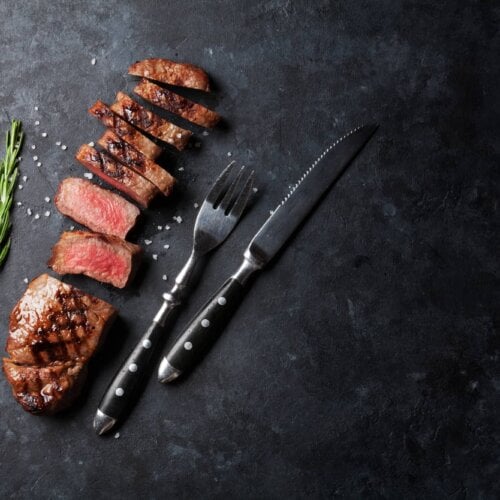


Our guide to a slow-roasted prime rib for the holiday table.
Our guide to baking a ham for Christmas dinner.


Leave a comment
This site is protected by hCaptcha and the hCaptcha Privacy Policy and Terms of Service apply.