




How to slow-roast prime rib
Our guide to a slow-roasted prime rib for the holiday table.

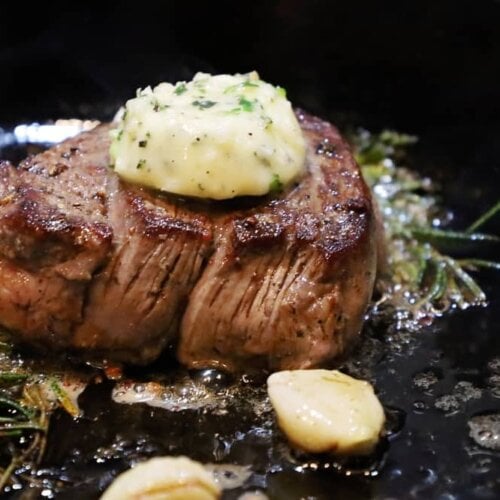
It's tough to beat a filet mignon hot off the grill, but grilling steak isn't always the easiest or most convenient option. Try pan-seared filet mignon instead when you want a home-cooked filet mignon without the fuss of firing up the grill. It still cooks relatively quickly compared to sous-vide and reverse-searing, but it yields equally delicious results.
This guide explains everything you need to know to learn how to pan sear filet mignon.

Different types of filet mignon can yield different flavors and textures. For example, a more affordable cut at the grocery store could save you money, but you may not get the tenderness and taste you wanted.
For the best results, choose filet mignon that's labeled as Premium Angus, USDA Prime, or Wagyu. These are the top tiers of steak reserved for those with the best marbling, color, and overall quality. Also, look for steaks that have been wet-aged or dry-aged. The aging process occurs over several weeks to enhance the quality of filet mignon.
The trick with filet mignon is to keep the seasoning simple to allow the steak’s mild flavors to shine through. Add salt to all sides and the edges of each filet, about 45 minutes before you’re ready to cook. Leave the steak at room temperature for that time, generously salted. Then, just before hitting the pan, sprinkle pepper on all sides of each filet. You can also use a light sprinkle of garlic powder or your favorite steak seasoning blend for some extra flavor.
You’ll need a neutral, high smoke point oil that helps the filet mignon sear without the oil burning and infusing not-so-great flavors into the meat. Avocado oil is a solid pick for this, as it usually can withstand cooking temperatures of up to 500 degrees. Grapeseed, safflower, and canola oil are also good options. These oils don’t break down as easily in high temperatures and don’t add unwanted flavors to your filet mignon. Refined olive oil can also work, although extra virgin olive oil is more delicate and may not stand up to the heat of your pan as well.
There are lots of behind-the-scenes tricks steak cooking experts have up their sleeves to get the best results for pan-seared filet mignon. Here’s what to know:
We recommend cooking filet mignon to medium-rare, but you’re welcome to cook it to your preferred doneness level, like medium, medium-well, or well-done. Regardless of how done you like your steak, it’s crucial to use a thermometer to check its doneness before serving. It’s a great practice to remove the steaks from the heat source when they are about 5°F below your desired final internal temperature. This takes into account the carryover cooking effect, ensuring that the steaks reach the perfect level of doneness while resting.
Below is a general guide to the doneness levels of filet mignon.
| Doneness Level | Description | Remove Steak From Heat Source at | Desired Final Internal Temperature |
|---|---|---|---|
| Rare | Red center, very juicy | 115-120°F / 46-49°C | 120-125°F (49-52°C) |
| Medium Rare | Pink center, warm and juicy | 125-130°F / 52-54°C | 130-135°F (54-57°C) |
| Medium | Pink center, slightly firm | 135-140°F / 57-60°C | 140-145°F (60-63°C) |
| Medium Well | Slight pink center, firm |
145-150°F / 63-66°C |
150-155°F (66-68°C) |
| Well Done | Brown throughout, very firm |
155°F / 68°C or lower |
160°F (71°C) or higher |


Filet mignon works best with simple sides that let the steak take center stage, so don’t think too hard about what you’ll pair it with. For a well-rounded, satisfying meal, here are several ideas to consider.
We hope our guide was helpful to you as you learn how to pan sear filet mignon. By following these steps and paying attention to detail, you can master the art of pan-searing filet mignon and treat yourself to restaurant-quality steak in the comfort of your own home. Browse the Chicago Steak Company's selection of mail-order filet mignon steaks to get high-quality filet mignon delivered to you. We offer USDA Prime, Wagyu, and Premium Angus filet mignon steaks that have undergone our wet-aging and dry-aging processes for enhanced flavor and texture.
Per Serving (based on 2 servings, based on a 2,000-calorie daily diet)
| Nutrient | Amount (% Daily Value (DV)) |
|---|---|
| Calories | 470 (24%) |
| Total Fat | 36g (46%) |
| Saturated Fat | 15g (75%) |
| Trans Fat | 0g |
| Cholesterol | 120mg (40%) |
| Sodium | 400mg (17%) |
| Total Carbohydrate | 0g (0%) |
| Dietary Fiber | 0g (0%) |
| Total Sugars | 0g |
| Added Sugars | 0g (0%) |
| Protein | 34g (68%) |
| Vitamin D | 0.2mcg (1%) |
| Calcium | 15mg (1%) |
| Iron | 3mg (17%) |
| Potassium | 530mg (11%) |
Main Course


Our guide to a slow-roasted prime rib for the holiday table.
Our guide to baking a ham for Christmas dinner.


Leave a comment
This site is protected by hCaptcha and the hCaptcha Privacy Policy and Terms of Service apply.