


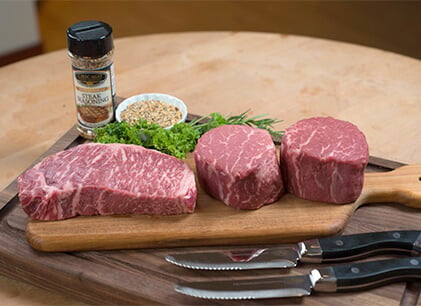

How to slow-roast prime rib
Our guide to a slow-roasted prime rib for the holiday table.

Salt encrusted prime rib is a bone-in roast packed in a shell of damp Kosher salt and roasted in the oven. The salt crust holds in moisture, so the inside cooks slowly and stays pink and juicy. You crack the shell off after the roast rests, and the meat does not taste salty.
Cooking up a whole Prime Rib roast is one of those challenges that you’ll likely only tackle for an anniversary or holiday dinner. Still, there are tricks that make it a little easier to turn out a perfectly pink slice of Prime Rib that is juicy and flavorful.
The salt encrusting method is a popular steakhouse trick you can easily replicate at home if you don’t mind buying a box of Kosher salt. It may take a little patience to get an even crust of salt around the meat, but the results will be worth the effort. Don’t worry. The meat won’t turn out salty despite being encased like this. Give it a try and see for yourself.
First, don’t confuse Prime Rib and the Prime level of USDA grading for beef. The Prime Rib is named that because it’s cut from the Primal section of the beef. You can buy a roast that is graded Prime, but you may also find that Choice grade Prime Rib is nearly as good.
No matter the grade, this large beef roast is known for its intense marbling and juicy texture when cooked with care. The meat must stay a tender pink medium rare for best results, which is what can make it a little tricky to cook at home. Using a salt crust helps slowly cook the interior without giving it a chance to dry out.
It’s as simple as mixing salt and a little water together to make a texture similar to wet sand that clings to itself. Once you pat this salt paste on the whole Prime Rib roast and encase it, you’ve created your salt-encrusted Prime Rib. It’s cooked in the oven the same way you’d normally roast it, aside from a slow final heating period that ensures it doesn’t go past medium-rare.
You remove the salt crust at the end of the resting period and right before slicing. No one will guess you cooked it this way unless you decide to share your kitchen secrets with them. Aside from the salt, no other special equipment is needed either.
Kosher salt has the best texture and resists melting when the water is added, allowing you to get the right wet sand consistency. It also tends to slump and crack the least when cooking.
Other types of salt may melt too much and give the roast a salty taste. Look for Kosher salt in boxes or bags since you’ll need about 3 pounds in total. Avoid any form of iodized salt in particular because it will impart a bitter and metallic taste to the surface of the roast.
It’s tempting to pick up a boneless Prime Rib roast so you can slice the meat cleanly without worrying about bones. However, the bone-in option has a number of benefits for this recipe.
First, bone-in Prime Rib tends to have a greater depth of flavor. It also stays a little juicier and cooks a little more evenly because the bone radiates heat into the center of the roast.
Second, the ribs make it easier to cut the roast because they serve as built-in handles. Third, it’s easier to stabilize the raw roast so it doesn’t roll as you pack the salt crust around it. Our Bone-In Heart of Rib Roast is a bone-in roast that weighs 8 to 9 pounds.
Salt encrusting is a technique that works well for a wide range of foods, including large beef and pork roasts. It’s a little too drying for something thin or small like a chicken breast, but it can work well for a whole chicken or quail. It’s also widely used in seafood restaurants for roasting whole fish like cod or snapper to perfection. Aside from meat, you’ll find techniques for roasting whole potatoes while nestled in a bed of salt as well.
1. Let the roast stand for about 30 minutes to come to room temperature. Pat the surface dry, then sprinkle the black pepper and garlic powder all over it and rub them in. Sprinkle about 1 cup of the Kosher salt on an aluminum foil-covered baking pan to form a thin base. Place the roast on top of this, rib side up. Preheat the oven to 325 degrees F.
2. Mix three cups of the salt with a little cold water, one teaspoon at a time, until it has a sandy consistency and sticks together in your hands. Start pressing it onto the surface of the Prime rib, building an even shell around 1/4th of an inch thick. If you need more salt, mix it up with a little more water until everything is covered.
3. Place in the oven and cook for around 20 minutes per pound. When the internal temperature reaches around 110 degrees F, turn off the oven. Leave the door closed and let the roast rest in the hot oven for 30 more minutes. Check it and remove it at 120 degrees F for rare and 125 degrees F for medium rare.
4. Let the roast rest for 20 to 30 minutes. Crack the salt shell and remove it in the largest pieces you can. Slice and serve immediately.
Per Serving (based on 8 servings, based on a 2,000-calorie daily diet)
| Nutrient | Amount (% Daily Value (DV)) |
|---|---|
| Calories | 580 (29%) |
| Total Fat | 44g (56%) |
| Saturated Fat | 17g (85%) |
| Trans Fat | 2g |
| Cholesterol | 135mg (45%) |
| Sodium | 980mg (43%) |
| Total Carbohydrate | 1g (0%) |
| Dietary Fiber | 0g (0%) |
| Total Sugars | 0g |
| Added Sugars | 0g (0%) |
| Protein | 42g (84%) |
| Vitamin D | 0.3mcg (2%) |
| Calcium | 26mg (2%) |
| Iron | 4.0mg (22%) |
| Potassium | 650mg (14%) |
Improve your Prime Rib game with this salt encrusting method you’ll find used at the country’s best steakhouses. Give it a try for pork roasts, whole chickens, and more to expand your roasting skills. To plan the meal, see how much prime rib per person to buy, make a simple au jus for prime rib, and learn how to reheat prime rib if you have leftovers.
Main Course
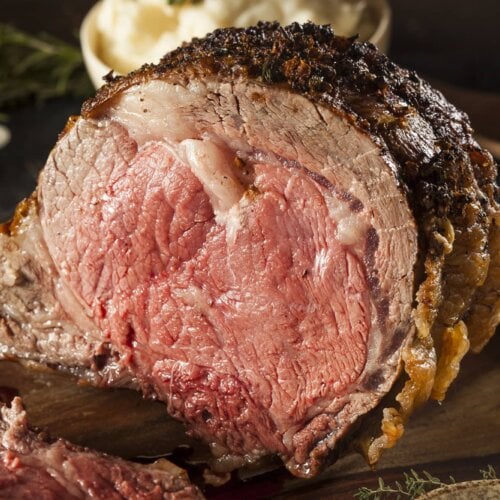


Our guide to a slow-roasted prime rib for the holiday table.
Our guide to baking a ham for Christmas dinner.


Leave a comment
This site is protected by hCaptcha and the hCaptcha Privacy Policy and Terms of Service apply.