




How to slow-roast prime rib
Our guide to a slow-roasted prime rib for the holiday table.

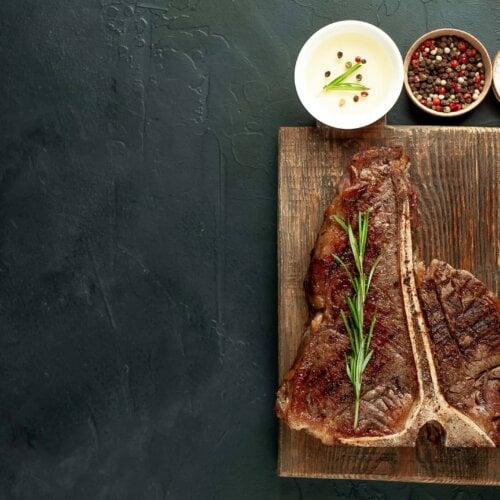
Even if you've pan-seared other steak cuts, tackling the T-bone offers a new set of challenges. Because it's technically two steak cuts in one and because it has a large bone running through its center, it cooks differently than other steaks do.
Fortunately, that doesn't mean it's impossible to learn how to pan sear T-bone steak. With this easy-to-follow guide, you can discover all the tips and tricks you need to know for a successfully seared steak dinner.
Achieve a successful T-bone pan sear with help from the following tips:
T-bone steak is available in various quality levels and sizes. For pan-seared T-bone, one of the most important things to look at is size because your steak needs to fit comfortably in your skillet to sear properly. Then, consider quality by noting the steak's labels. Premium Angus, USDA Prime, and Wagyu are top-quality cuts of steak that yield excellent results from pan searing and finishing off in the oven. Opt for T-bone steaks that are at least 1 to 1.5 inches thick. Thicker steaks are better suited for pan-searing because they allow for a nice crust to develop on the outside while maintaining a juicy and tender interior.
Trim any excess fat from the edges of the steak to prevent flare-ups during cooking. However, leave some fat on the steak as it adds flavor and juiciness. If the fat cap on the steak is thick, consider scoring it with a sharp knife in a crosshatch pattern. This helps render the fat and enhances the texture of the steak.
T-bone steak is quite a bit larger than others, so it's important to use a cast-iron skillet that's large enough to accommodate it to get an even sear. Make sure the steak can lie flat on all edges and that you have enough room to flip it to the other side with tongs easily. If cooking multiple steaks, you may need to sear one at a time to avoid overcrowding your pan.
The best way to ensure an accurate T-bone steak cook is to use a food thermometer. After searing your steak, check the temperature by inserting the probe into the thickest portion. If your steak still needs cooking time, move it into the oven. Check the temperature again before resting. Follow this guideline to ensure your steaks reach the desired level of doneness during the resting period:
| Doneness Level | Description | Remove Steak From Heat Source at | Desired Final Internal Temperature |
|---|---|---|---|
| Rare | Red center, very juicy | 115-120°F / 46-49°C | 120-125°F (49-52°C) |
| Medium Rare | Pink center, warm and juicy | 125-130°F / 52-54°C | 130-135°F (54-57°C) |
| Medium | Pink center, slightly firm | 135-140°F / 57-60°C | 140-145°F (60-63°C) |
| Medium Well | Slight pink center, firm | 145-150°F / 63-66°C | 150-155°F (66-68°C) |
| Well Done | Brown throughout, very firm | 155°F / 68°C or lower | 160°F (71°C) or higher |

Ingredients:
Instructions:
Per Serving (based on 2 servings, based on a 2,000-calorie daily diet)
| Nutrient | Amount (% Daily Value (DV)) |
|---|---|
| Calories | 580 (29%) |
| Total Fat | 46g (59%) |
| Saturated Fat | 18g (90%) |
| Trans Fat | 0g |
| Cholesterol | 150mg (50%) |
| Sodium | 390mg (17%) |
| Total Carbohydrate | 1g (0%) |
| Dietary Fiber | 0g (0%) |
| Total Sugars | 0g |
| Added Sugars | 0g (0%) |
| Protein | 42g (84%) |
| Vitamin D | 0.3mcg (2%) |
| Calcium | 20mg (2%) |
| Iron | 3.5mg (19%) |
| Potassium | 590mg (13%) |
Use this guide the next time you want to enjoy a steakhouse-worthy meal right in your own home. Order T-bone steak online from Chicago Steak Company to get started. Choose between Premium Angus or Wet-Aged T-Bone, either of which are flash frozen and individually wrapped to preserve their freshness and quality en route to your home.
Main Course


Our guide to a slow-roasted prime rib for the holiday table.
Our guide to baking a ham for Christmas dinner.


Leave a comment
This site is protected by hCaptcha and the hCaptcha Privacy Policy and Terms of Service apply.