




How to slow-roast prime rib
Our guide to a slow-roasted prime rib for the holiday table.

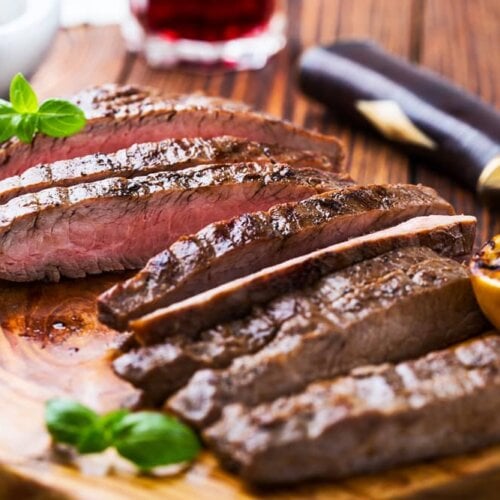
When you use the right grilling techniques, grilled steak is one of the most delectable proteins you can put on your plate. Although flank steak is a thinner cut that can dry out easily, it's just right for the grill, especially with a little practice and a yummy marinade.
Use this guide to learn all about how to grill flank steak while keeping it moist and tender.
You’ll find lots of different options for flank steak when you buy it. The most common choices are USDA Prime, Choice, or Select. USDA Prime denotes the best marbling of these options, which leads to the most tender steaks when cooked properly. However, USDA Choice is also a solid option if you want to save a little money and still get a high-quality piece of flank steak.
You might also find dry-aged and wet-aged flank steaks. While either is an excellent option, dry-aging takes a bit more time to break down tough steak tissue, which is beneficial for flank steak you’ll put on the grill.
You can grill flank steak on a gas or charcoal grill. For either type of grill, consider brushing a small amount of olive oil on the grates to prevent the steak from sticking. If your grates do tend to stick to meat, you can use a grill pan instead.
Here's how to get your grill ready:
Preheat your gas grill to 450-500 degrees, depending on its maximum temperature. If you have a two-zone grill, make one side high heat and the other low, about 275 degrees. Bring the heat to temp fully — about 5-10 minutes — before cooking.

Mound coals in the bottom and center of your grill. Spray lighter fluid on the coals and light with a match. Once the coals should turn white, they're ready to start heating up your steak. This usually takes 10-15 minutes. Evenly move the coals around on the bottom of the grill before cooking.
Some people prefer using a chimney starter to light the coals. To do this, crumple a couple of pieces of newspaper at the bottom of the starter and place coals on top. Then, light the newspaper. Give it about 10-15 minutes to turn the coals white before dumping the coals on the bottom of the grill to start cooking.

Flank steak is relatively thin compared to other cuts you might be used to working with, like ribeye or tenderloin. Therefore, it cooks quickly on the grill. In most cases, you can cook a flank steak on the grill in about 10 minutes to medium-rare.
Use a digital meat thermometer to find the accurate temperature of flank steak. Because this cut is thinner than others, it might not look quite done enough on the outside, but done more than you’d like on the inside. Once you become more familiar with grilling it, you’ll get a good idea of its look and feel for the level of doneness you like, but the only way to know for sure what temperature it is inside is with a meat thermometer.
Check the flank steak on the grill by inserting the probe into its thickest part and comparing that temperature to the ‘remove from heat’ temperature in the chart above to determine when to pull it from the grill. Then, temp the steak again after resting to ensure that it’s reached your ideal doneness temperature.
While medium-rare is our suggested level of doneness for flank steak (more on that in a moment), it’s certainly not the only way to cook it. Use the chart below to gauge when to pull flank steak from the grill and the final temperature to expect.
| Doneness | Temperature to Remove from Heat | Final Temperature |
| Medium-rare | 125-130℉ | 130-135℉ |
| Medium | 135-140℉ | 140-145℉ |
| Medium-well | 145-150℉ | 150-155℉ |
| Well-done | 155-160℉ | 160-165℉ |

A medium-rare flank steak yields just the right texture for this cut of meat — not too tough, with just the right bite, and a pinkish-red, juicy center.
To grill flank steak to medium-rare, place the steaks on the high-heat side of the grill after seasoning. Let sear on one side for 2-3 minutes before flipping to the other side and searing for another 2-3 minutes. Remove flank steak when the internal temperature reaches 125-130℉ in its thickest part. Then, rest for five minutes until the final temperature comes to 130-135℉.
Before we get into the nitty-gritty of grilling flank steak, we're offering a few extra tips that can help you as you learn the techniques.
Flank steak is one of the best cuts of beef to marinate, especially if it's heading to the grill. Use your favorite marinade on the steak for at least a few hours before you're ready to grill it to let the extra flavor soak in, and the marinade's acidity break down tough fibers. You'll end up with a crisp, flavorful flank steak.

Flank steak is one of the best cuts of beef to marinate, especially if it’s heading to the grill. Use your favorite marinade on the steak for at least a few hours before you’re ready to grill it to let the extra flavor soak in, and the marinade’s acidity breaks down tough fibers. You’ll end up with a crisp, flavorful flank steak. Here are some flavor ideas:
If you want to save time, use a seasoning blend or rub instead to deliver plenty of flavor. Some seasoning and rub ideas for flank steak include:
Because of its thinner profile, flank steak can use a more watchful eye than other steaks. This steak is quick to grill, so it's best to stay nearby when cooking, just to make sure it doesn't get a little overzealous when searing.
Use a digital meat thermometer to find the accurate temperature of flank steak. Because this cut is thinner than others, it might look not quite done enough on the outside but done more than you'd like it on the inside. Once you become more familiar with grilling it, you'll get a good idea of its look and feel for the level of doneness you like, but the only way to know for sure what temperature it is inside is with a meat thermometer.
Check flank steak on the grill by inserting the probe into its thickest part and comparing that temperature to the 'remove from heat' temperature in the chart above to determine when to pull it from the grill. Then, temp the steak again after resting to ensure that it's reached your ideal doneness temperature.
You'll find lots of different options for flank steak when you buy it. The most common choice is USDA Prime, Choice, or Select. USDA Prime denotes the best marbling of these options, which leads to the most tender steaks when cooked properly.
You might also find dry-aged and wet-aged flank steaks. While either is an excellent option, dry-aging takes a bit more time to break down tough steak tissue, which is beneficial for flank steak you'll put on the grill.

While classics like grilled asparagus, corn on the cob, or mashed potatoes always have a place at the table, flank steak is versatile enough to pair with sides that aren’t “the usual.” Try grilled Mexican street corn salad, charred scallions, or blistered peppers for something a little different. Instead of mashed potatoes, use a different grain, like farro or quinoa, infused with lemon and herbs. Or, serve grilled flank steak with smashed fingerling potatoes, grilled peaches or pineapple, or roasted sweet potato wedges.
Did you make too much flank steak? No worries — store it properly (wrapped in plastic wrap and stored in an airtight container in the fridge) to keep it from drying out, and you’ll have about three more days to use your leftovers.
One of our favorite options is slicing it thin and tossing it into a salad with your favorite toppings, like cherry tomatoes and eggs. You can also make a steak sandwich by adding thin flank steak slices to a toasted baguette with melted provolone and sautéed onions. Tacos are another option, pairing flank steak with fresh pico, avocado, and lime. Or, add it to a stir-fry with veggies and soy sauce for a quick dinner during the week.
We absolutely love a high-quality flank steak cooked on the grill, but this cut is incredible when cooked in various other ways, too. If the weather’s a little too cold for grilling or you just want a way to cook flank steak in your kitchen, try one of these other methods:
Check out our other flank steak cooking guides to pan-sear or roast this steak to perfection, right in your own kitchen.
Main Course


Our guide to a slow-roasted prime rib for the holiday table.
Our guide to baking a ham for Christmas dinner.


Leave a comment
This site is protected by hCaptcha and the hCaptcha Privacy Policy and Terms of Service apply.