




How to slow-roast prime rib
Our guide to a slow-roasted prime rib for the holiday table.

Not all steaks look like they were destined for the cover of foodie magazines. Flat iron is one of those cuts that doesn’t always look as enticing as more decadent cuts, like the ribeye or New York strip. Still, it’s one that you don’t want to ignore if you’re on a quest to try some of the best steaks.
The thinner-than-average flat iron cooks quickly, allowing you to whip up a simple steak dish in just a few minutes in your kitchen. Despite its lower price tag than many other steaks, flat iron offers incredible flavor and texture in every bite. Its versatility also makes it the star of almost any type of dish you want to make.
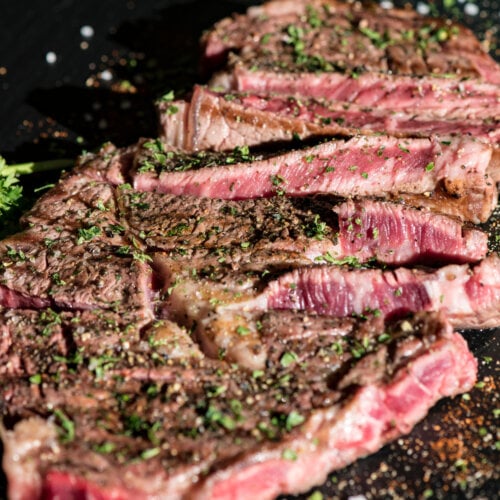
Flat iron steak looks different from other steaks you’re used to — you know, the big, beefy, thick steaks you’d typically get at a restaurant. The thinner flat iron may not be the boldest looking on a plate, but it certainly exudes flavor, which is why it remains a popular choice regardless of its more modest size. In fact, its taste is comparable to strip steak, and its marbling and texture are similar to the tender ribeye.
You might also hear flat iron referred to as an oyster blade steak, butlers’ steak, or top blade steak. The shoulder area of the cow from which flat iron comes was once off-limits for steak eaters because of how chewy it was. However, more modern methods have taught butchers how to cut flat iron in a way that removes the tough connective tissue, allowing for a more savory, melt-in-your-mouth texture that we know and love today.
Flat iron is thinner than other cuts, so it’s an excellent choice for non-standard steak dishes, like steak salads, sandwiches, fajitas, and more.
The chuck shoulder primal portion of the cow is where you'll find the flat iron. The area is right in the front body of the animal in a highly muscular area where you'll also find the chuck roast, also known for being much tougher than other steaks.
For flat iron steak, you want a cut that’s a good half-inch thick, evenly shaped, and has thin white streaks of fat that run end to end. The fat melts quickly on the grill and keeps every bite juicy. Skip flat iron steaks with ragged edges or dull, grayish meat. Instead, look for bright, cherry-red muscle, which signals freshness. Give the package a quick check, too. Prime or Choice grades cost a hair more but reward you with extra-buttery texture and deep beef flavor. Press the package’s plastic to feel the steak’s firmness. A fresh flat iron will be somewhat firm, cold, and a little springy when pushed in.
Flat iron cooks lightning-fast, so a bit of forethought keeps it juicy instead of overdone. Keep these chef-tested tips handy before your steak hits the heat.
Flat iron steak cooks quicker than most other cuts you might be used to serving. However, the rest of the cooking processes are mostly the same.
Be sure to salt all sides of your flat iron steak generously and allow to rest at room temperature for 45 minutes before cooking to create a dry brine that crisps up the outer edges. Then, follow along with these instructions to cook flat iron steak:
The grill is the perfect place for flat iron steak. Here’s how to get the best results using a charcoal or gas grill.
Don’t have a grill? That’s okay — you can use your oven instead.
Cooking flat iron steak on the stove is quick and to the point. Here’s what to do:
Sous vide helps you get a precise cook on flat iron, so it’s a great way to cook this cut when you know exactly what doneness you’re going for.
Smoking flat iron infuses it with woodsy flavors while keeping the thin cut juicy.
The air fryer delivers a quick weeknight flat iron with edges that mimic a good broil.
Make sure your flat iron is cooked to your desired doneness level by using a digital meat thermometer to test its temperature. Insert the probe into the thickest part of the meat. For medium-rare, the steak should reach 125 degrees before pulling it from the heat, as it cooks a little more while resting. Tent the resting area with foil to keep some heat in. Then, check the temperature again after 5-10 minutes to ensure that your flat iron has reached 130-135 degrees.
Flat iron’s deep, beefy bite begs for sides that either cut the richness or double down on comfort. Here are some side dishes to consider adding to your plate the next time you fire up a flat iron:
Don’t let the thinner profile of flat iron steak fool you; this cut is full of flavor and has an excellent texture when cooked properly. Plus, its uniform thickness takes some of the guesswork out of cooking it, as it cooks relatively evenly throughout.
Want to try whipping up a flat iron steak dish at home? Order yours from Chicago Steak Company. We offer Premium Angus, USDA Prime Wet Aged, and Kobe-Wagyu flat iron steaks shipped straight to your home.
Per 4 oz Cooked Serving (Based on a 2,000-Calorie Daily Diet)
| Nutrient | Amount (% DV) |
|---|---|
| Calories | 250 |
| Total Fat | 16g (21%) |
| Saturated Fat | 7g (35%) |
| Cholesterol | 75mg (25%) |
| Sodium | 160mg (7%) |
| Total Carbohydrate | 0g (0%) |
| Dietary Fiber | 0g (0%) |
| Sugars | 0g |
| Protein | 26g (52%) |
| Iron | 2.7mg (15%) |
| Vitamin C | 0mg (0%) |
| Calcium | 10mg (1%) |
| Potassium | 350mg (7%) |
Main Course


Our guide to a slow-roasted prime rib for the holiday table.
Our guide to baking a ham for Christmas dinner.


Leave a comment
This site is protected by hCaptcha and the hCaptcha Privacy Policy and Terms of Service apply.