


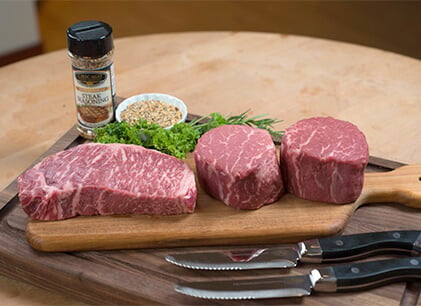

How to slow-roast prime rib
Our guide to a slow-roasted prime rib for the holiday table.

The long and skinny skirt steak may not look like those bulky, mouthwatering steaks at the local steak restaurant, but that doesn't mean it's unworthy of your dinner plate. In fact, skirt steak comes from one of the most flavorful areas of a cow. When cooked correctly, it yields and tender and delicious steak.
In this guide, we'll explain everything you need to know about reverse searing skirt steak. This cooking method cooks skirt steak slowly in the oven to bring it to an even temperature before locking in its juices and flavor with a pan sear.
The preparation for reverse seared skirt steak is simple. Here's what to do:
If you're not using a marinade, remove the steaks from the refrigerator and sprinkle salt on both sides. Then, leave at room temperature for 45 minutes before you're ready to start cooking. If using a marinade, remove the steaks from the marinade and leave them at room temperature for 45 minutes. Just before placing the steaks in the oven, pat them dry (if marinated) and sprinkle black pepper on both sides.
Preheat the oven to 200 degrees for medium-rare or 225 degrees for other doneness levels about ten minutes before cooking. Lightly coat a baking sheet with cooking spray.
When the steaks have about five minutes left to cook, heat a skillet with a drizzle of oil to medium-high heat.
Plan for about an hour of cooking time once you place your skirt steak in the oven. This includes oven-cooking time, pan-searing, and resting. You'll also need 45 minutes before you start cooking to let your steak brine if you're not using a marinade. Steaks cooked past medium-rare doneness may also need an extra 15-30 minutes.
We've included the following temperature chart to help you determine when your skirt steak has reached your preferred level of doneness.
| Steak Doneness | Temperature to Remove from Oven | Final Temperature |
| Medium-rare | 125°F-130°F | 130°F-135°F |
| Medium | 135°F-140°F | 140°F-145°F |
| Medium-well | 145°F-150°F | 150°F-155°F |
| Well-done | 155°F-160°F | 160°F-165°F |
To reverse-sear skirt steak to medium-rare, salt the steak on both sides and leave at room temperature for 45 minutes. Then, set the oven to 200 degrees. Cook for 20 minutes in the oven. Use a thermometer to check the temperature, and use the chart above to determine if your steak needs a few more minutes in the oven. Sear on each side for 1-3 minutes before resting for 5 minutes.
Here are a few tips to help you reverse sear skirt steak:
First, let's talk marinating. You can marinate skirt steak to add some flavor and help tenderize the steak. Skirt steak is actually one of the most accepting of marinades because its looser structure leaves plenty of space for the marinade to enter. However, this is completely optional.
If you do decide to use a marinade, remember to pat the steaks dry before putting them in the oven to allow them to crisp.
Use a thermometer after your steak has cooked for 20 minutes in the oven to gauge how much more time it might need to cook. A medium-rare steak might be ready to sear, but medium and higher steaks could need a few more minutes. A reliable thermometer is the best tool to check to avoid overcooking.
When choosing skirt steak, be sure to prioritize quality. High-quality skirt steaks, like USDA Prime and Wagyu, can offer better results than cheaper steaks. Steaks labeled as wet-aged or dry-aged can also denote the best options, as the aging process can enhance flavor and tenderness.
The following steps include everything you need to know about reverse searing skirt steak from start to finish.
Remove steaks from the refrigerator 45 minutes before you're ready to cook. Let them rest at room temperature. If you didn't marinate the steaks, add salt to both sides before resting. Spray a rimmed baking sheet with cooking spray. Then, preheat the oven (200 degrees for medium-rare or 225 degrees for medium and up) about 10 minutes before the steaks are done with their resting period.
Move steaks to the pan and into the oven on the middle rack. Cook for 20 minutes, checking the temperature with a thermometer. If needed, place back in the oven for another 10-20 minutes. Sear steaks on each side for 1-3 minutes in a preheated, oiled skillet.
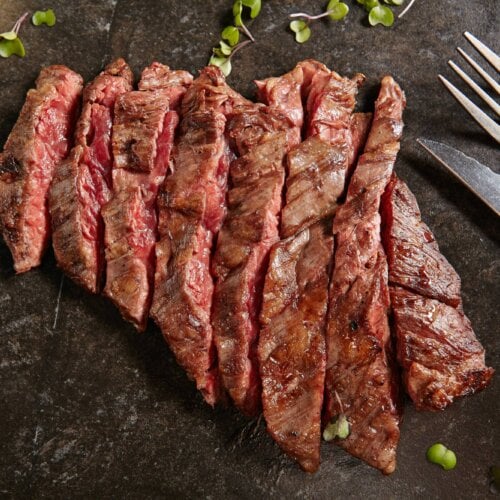
Remove steaks from the heat, tent with foil, and rest for 5 minutes. If slicing, wait until after the steaks are done resting. Then, slice against the grain.
Serves: 2
Prep time: 45 minutes
Cooking time: 45 minutes-1 hour
Ingredients:
Instructions:
Per Serving (based on 4 servings, based on a 2,000-calorie daily diet)
| Nutrient | Amount (% Daily Value (DV)) |
|---|---|
| Calories | 420 (21%) |
| Total Fat | 30g (38%) |
| Saturated Fat | 12g (60%) |
| Trans Fat | 1g |
| Cholesterol | 115mg (38%) |
| Sodium | 540mg (23%) |
| Total Carbohydrate | 0g (0%) |
| Dietary Fiber | 0g (0%) |
| Total Sugars | 0g |
| Added Sugars | 0g (0%) |
| Protein | 34g (68%) |
| Vitamin D | 0.2mcg (1%) |
| Calcium | 20mg (2%) |
| Iron | 3.2mg (18%) |
| Potassium | 580mg (12%) |
Still deciding if reverse searing skirt steak is the best method to choose? Here are the pros and cons to consider:
Pan-searing is the traditional method of cooking steak. You start with searing the steak in a heated pan with some oil, searing on both sides for a few minutes. If necessary, you then put the steak in the oven until it reaches your desired internal temperature. Reverse searing switches these two steps, oven-cooking first and following with a pan sear.
Main Course


Our guide to a slow-roasted prime rib for the holiday table.
Our guide to baking a ham for Christmas dinner.


Leave a comment
This site is protected by hCaptcha and the hCaptcha Privacy Policy and Terms of Service apply.