
Filet Mignon Temperature Guide (Doneness Chart)

The right filet mignon temperature for most people is medium rare. That means 130 to 135 degrees F in the center after the steak rests. To get there, pull the filet off the heat at about 125 degrees F. It keeps cooking for a few minutes while it sits.
That pull temperature is the whole secret. Filet mignon is lean and tender, and it can go from perfect to gray in a minute or two. The chart below gives you the pull temp and the final temp for every doneness, from rare to well done. After that, you will learn how to check the temp, how long to rest the steak, and the mistakes that cost people a good filet.
Filet Mignon Temperature Chart
Use the "pull at" column while you cook. That is when the filet comes off the grill, out of the pan, or out of the oven. The "final temp" column is where it lands after a short rest.
| Doneness | Pull at | Final temp after rest | What the center looks like |
|---|---|---|---|
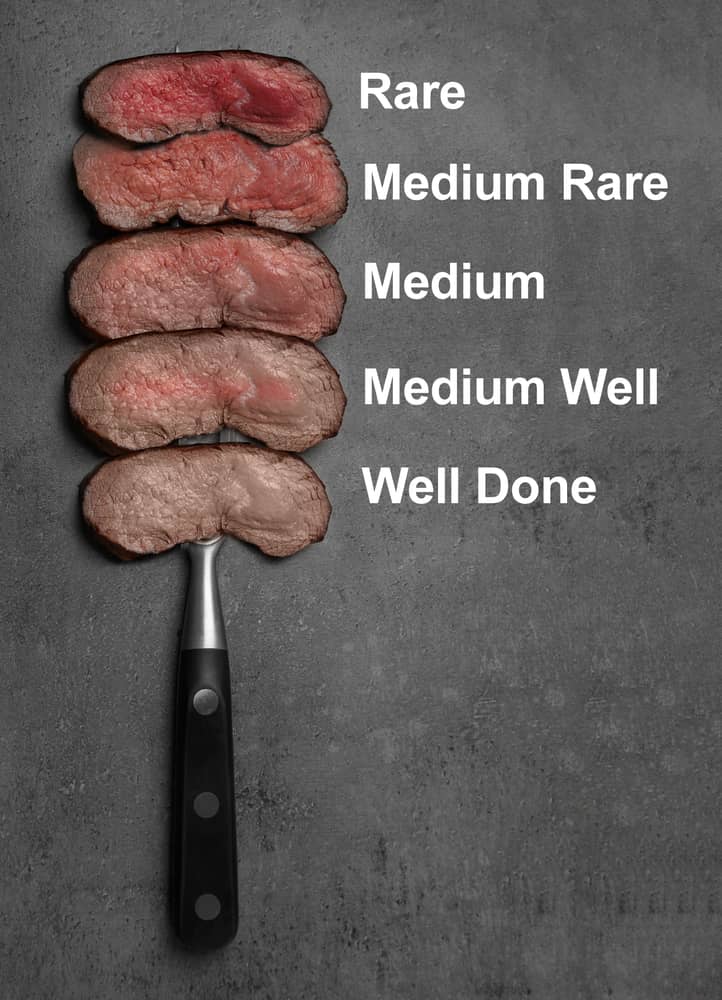
| Rare | 115 degrees F (46 C) | 120 to 125 degrees F (49 to 52 C) | Deep red and cool to warm |
| Medium rare | 125 degrees F (52 C) | 130 to 135 degrees F (54 to 57 C) | Warm red center, pink edges |
| Medium | 135 degrees F (57 C) | 140 to 145 degrees F (60 to 63 C) | Warm pink, no red |
| Medium well | 145 degrees F (63 C) | 150 to 155 degrees F (66 to 68 C) | A thin line of light pink |
| Well done | 155 degrees F (68 C) | 160 degrees F and up (71 C and up) | Brown all the way through |
These numbers match the ones in our ultimate guide to steak temperatures. A filet just gives you less room for error than a fatty steak, so it pays to know them by heart.
Filet Mignon Medium Rare Temp and the Other Doneness Levels
Here is what each level means for a filet, and who it is best for.
Rare (pull at 115 degrees F). The center stays deep red and soft. Filet is so tender that rare works fine, but the meat can taste a little flat because there is not much fat to warm up.
Medium rare (pull at 125 degrees F). This is the sweet spot for filet mignon. The center is warm and red, the edges turn pink, and the meat stays juicy. If you are cooking for a crowd and do not know what they like, this is the safe bet.
Medium (pull at 135 degrees F). The center turns warm pink with no red. A filet still eats tender at medium. It just loses a little of its juice.
Medium well (pull at 145 degrees F). Only a thin band of light pink is left. Because filet has so little fat, it starts to dry out here. If someone at your table wants medium well, a basting of butter in the pan and a sauce on the plate help a lot.
Well done (pull at 155 degrees F). The steak is brown all the way through. You can do it, but filet is the cut that suffers most from it. Cook it slowly at lower heat so the outside does not burn before the center gets there.
Not sure what each level looks like on a plate? Our guide to steak doneness walks through the colors and textures one by one.

Why Filet Mignon Needs a Thermometer
Filet mignon comes from the tenderloin. It is the most tender cut on the steer, and it is also one of the leanest. That is great for texture, but it changes how you cook it.
- Less fat means less cushion. A ribeye has marbling that keeps it juicy if you go a few degrees too far. A filet does not have that backup.
- It is thick. Filets are often cut 1 1/2 to 2 inches thick. The outside can look done long before the center is ready.
- The finger test is a guess. Filet feels soft at almost every doneness, so poking it tells you very little.
An instant read thermometer takes the guessing out. It costs less than one good filet, and it pays for itself the first time it saves a steak.
How to Check the Temperature of Filet Mignon
Where you put the probe matters as much as the number you read. Follow these steps every time.
- Start checking early. Take the first reading a few minutes before you think the steak will be ready.
- Go in from the side. Slide the probe into the side of the filet, not down through the top. This gets the tip into the very center of a thick steak.
- Find the coolest spot. Push the tip a little past the center, then pull it back slowly. The lowest number you see is the real reading.
- Stay away from the pan. If the tip touches the pan or the grill grate, the number will read high.
- Pull at the "pull at" temp. Move the steak to a plate or board as soon as it hits the number in the chart.
Check each steak on its own. Two filets in the same pan can finish a minute or two apart, especially if one is thicker.
Carryover Cooking and How Long to Rest Filet Mignon
A steak does not stop cooking the second it leaves the heat. The hot outside keeps pushing heat into the center. This is called carryover cooking, and it is why the chart has two columns.
On a thick filet, the center usually climbs about 5 to 10 degrees F while it rests. Steaks cooked over very high heat climb more. Steaks cooked low and slow, like a reverse sear, climb less.
Let the filet rest for 5 to 10 minutes before you cut it. Set it on a warm plate or a board and leave it alone. Do not cover it tight with foil, or the steam will soften the crust. If you want, lay a piece of foil loosely over the top.

Resting also gives the juices time to settle. Cut into a filet right away and more of that juice ends up on the board instead of in the steak.
Filet Mignon Temperature by Cooking Method
The pull temps in the chart work no matter how you cook. What changes is how fast the steak gets there, so here is what to watch for with each method.
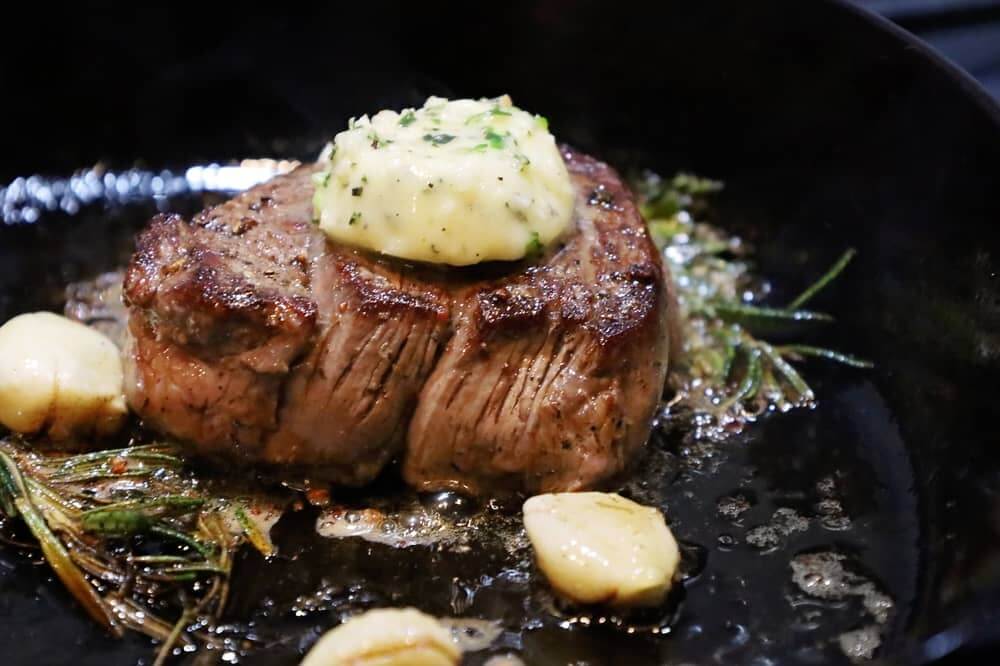
Pan sear. A hot cast iron pan builds a great crust fast. Thin filets can finish right on the stove. Thick ones often need a few minutes in a hot oven to reach the center. See our steps to pan sear filet mignon.
Oven. The oven gives even heat, which makes it easy to hit your number. Start checking early, because the temp climbs steadily and you cannot see the center. Our guide on how to cook filet mignon in the oven covers the full method.
Grill. Sear over direct heat, then move the steak to the cooler side if the outside is done before the inside. Flare ups can char a lean filet fast, so stay close. Get the details in our guide to grilling filet mignon.
Reverse sear. You cook the filet low first, then sear it hot at the end. This gives the most even color from edge to edge. Pull it from the low heat about 10 to 15 degrees F below your target, then sear it until it hits the pull temp. Since the steak heats slowly, it climbs less while it rests. Try our reverse sear filet mignon method.
Is Medium Rare Filet Mignon Safe?
The USDA says to cook whole cuts of beef, like steaks and roasts, to at least 145 degrees F and let them rest for 3 minutes. That is the official safe minimum.
Many steak lovers still choose medium rare or rare for whole steaks like filet. It is your call. If you are cooking for kids, older adults, someone who is pregnant, or anyone with a weak immune system, cook to 145 degrees F to be safe. Ground beef is a different story. Always cook it to 160 degrees F.
Common Filet Mignon Temperature Mistakes
- Pulling at the final temp. If you wait for 130 degrees F on the thermometer, carryover will push the steak to medium. Pull at 125 degrees F for medium rare.
- Cooking it cold from the fridge. A cold center takes longer to heat, so the outside overcooks. Let filets sit out for about 30 minutes before cooking.
- Skipping the dry off. A wet steak steams before it sears. Pat it dry with paper towels, then season it well with salt and pepper.
- Trusting the clock. Cook times are only a guide. Thickness, heat, and even the pan change the timing. The thermometer makes the final call.
- Cutting in too soon. Give it the full 5 to 10 minute rest. It is worth the wait.
Start With a Better Filet
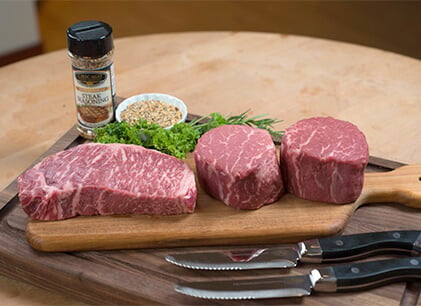
A thermometer gets the inside right. The steak you start with decides how good it can be. Our USDA Prime Filet Mignon is aged for six weeks and has more marbling than most filets, so it has a little more room for error. For a great everyday filet, the Premium Angus Filet Mignon comes fully trimmed and ready for the pan.
Once it is cooked to the right temp, finish it with one of our sauces for filet mignon.
The Bottom Line
For a perfect filet mignon, pull it at 125 degrees F and let it rest for 5 to 10 minutes. It will finish at 130 to 135 degrees F, a warm red medium rare. Use the chart for any other doneness, check the center from the side, and let the thermometer make the call.




Leave a comment
This site is protected by hCaptcha and the hCaptcha Privacy Policy and Terms of Service apply.