
Individual Beef Wellington Recipe (Filet Mignon)

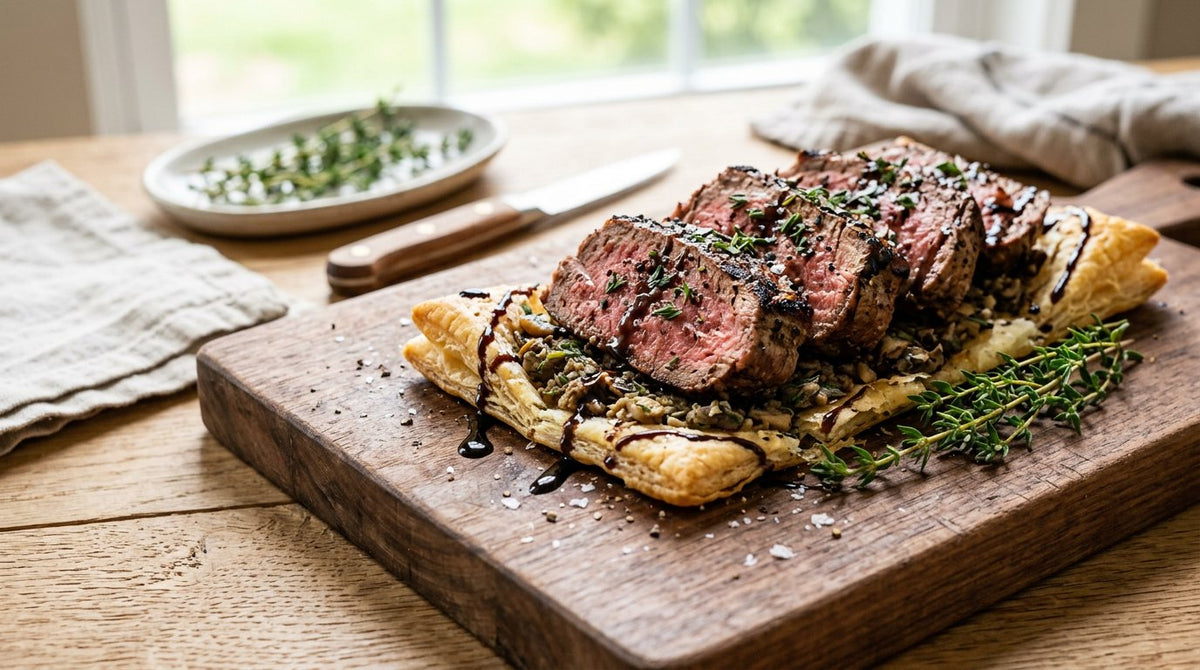
An individual beef wellington is one filet mignon, seared hard, coated in mushroom duxelles and prosciutto, then baked in its own jacket of puff pastry. Each guest gets a whole one. It looks like a fancy steakhouse plate, but it is easier than a full wellington roast. The steaks are small, so they cook fast and evenly, and you can wrap them a day ahead.
Here is the short version. Sear the filets, chill them, wrap them, chill them again, then bake at 425°F until the center reads 120°F for medium rare. Rest for 10 minutes and cut. Below you will find the full method, the pull temps, the mistakes that cause a soggy crust and a quick red wine sauce to pour over the top.
Why Make Individual Beef Wellingtons?
A classic beef wellington wraps a whole center-cut tenderloin. It is a showpiece, but it is tricky. The ends cook faster than the middle, and if you cut into it too soon you can't fix it. Individual wellingtons solve most of that.
- Even cooking. Each filet is the same size, so they all hit the same temp at about the same time.
- Easy to plan. Make two for date night or eight for a holiday table. The method stays the same.
- Make ahead. Wrap them in the morning or the day before. Bake them when your guests sit down.
- Doneness by the plate. Pull one early for the guest who wants it rare. Leave one in a bit longer for medium.
What You Need for Individual Beef Wellington
The best cut: filet mignon
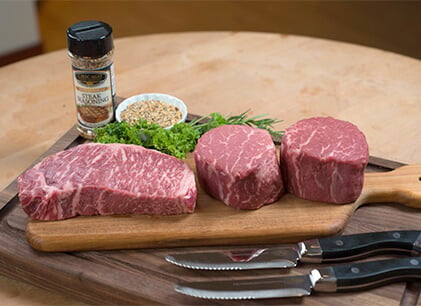
Filet mignon is the right steak for this job. It is the most tender cut on the steer, it has very little fat to melt into the pastry and its round shape wraps neatly. Look for center-cut filets that are about 8 ounces and 2 inches thick. Thick steaks are key. A thin steak will overcook before the pastry turns golden.
Our USDA Prime Filet Mignon is a great fit here. Pick the 8 ounce size, and all you do is season and sear.
Can you use another cut? A thick, well-trimmed ribeye or strip will work, but the fat can make the bottom crust greasy. For a true wellington, stick with filet.
The layers
| Layer | What it is | Why it matters |
|---|---|---|
| Dijon mustard | A thin coat brushed on the seared steak | Adds a little tang and helps the next layer stick |
| Duxelles | Finely chopped mushrooms cooked down with shallot, garlic and thyme | Deep, savory flavor that soaks up juice |
| Prosciutto | Thin slices of dry-cured ham | A moisture barrier between the meat and the pastry |
| Puff pastry | Store-bought all-butter sheets work best | The flaky, golden shell |
| Egg wash | One egg beaten with a splash of water | Seals the seams and gives a deep brown shine |
Simple swaps
- No prosciutto? Use thin crepes or leave it out. Without a barrier, chill the wrapped steaks longer so the pastry stays crisp.
- Mushrooms. Cremini are the go-to. White button mushrooms work too. A few dried porcini, soaked and chopped, add even more depth.
- Pate. Some cooks spread a thin layer of pate on the steak. It is optional. This recipe skips it to keep things simple.
How to Make the Duxelles
Duxelles is the heart of the flavor, and it is where most wellingtons go wrong. The mushrooms hold a lot of water. If you don't cook it out, that water soaks into the pastry and makes it soggy.
Chop the mushrooms very fine. A food processor makes this fast. Pulse them until they look like coarse crumbs, not paste. Cook them in butter over medium-high heat with a minced shallot, garlic and fresh thyme. Stir often. At first the pan will look wet. Keep going until the mushrooms are dark brown and the pan is dry, about 12 to 15 minutes. Add a splash of red wine, cook it off and season with salt and pepper.
Spread the duxelles on a plate and let it cool all the way. Warm filling will melt the butter in the pastry before it ever gets to the oven.
Wrapping and Assembling Your Wellingtons

Sear and chill the steaks
Season the filets with salt and pepper and sear them in a very hot skillet, about 1 to 2 minutes per side plus the edges. You only want a brown crust. The center should stay raw. Our guide to pan searing filet mignon shows the setup. Brush the hot steaks with Dijon, then chill them for 15 minutes. Cold steaks keep the pastry firm while you wrap.
Build the layers
Lay two slices of prosciutto on a sheet of plastic wrap so they overlap a little. Spread about 1/4 cup of duxelles on top in a circle a bit larger than the steak. Set a cold filet on the duxelles. Lift the plastic wrap to fold the prosciutto up and around the sides of the steak, then twist the wrap tight into a ball. Chill these bundles for 15 minutes so they hold their shape.
Seal the pastry
Plan on one sheet of puff pastry per wellington. Roll each sheet out a little, to about 13 by 10 inches, then cut it into an 8 inch square for the top and a 4 1/2 inch square for the bottom. Unwrap a bundle and set it seam side down on a small square. Brush the edges with egg wash. Drape a large square over the top and press it snug around the steak with no air pockets. Trim the pastry into a round with about a 1/2 inch border and crimp the edge with a fork. Set them on a sheet pan lined with parchment, brush with egg wash and cut a small X on top so steam can escape.
Chill the wrapped wellingtons for at least 30 minutes before baking. You can also cover them and keep them in the fridge for up to 24 hours. This is the best make-ahead step in the recipe.
Individual Beef Wellington Cooking Time and Temperature
Bake at 425°F. Plan on about 20 to 25 minutes for 2 inch filets that go into the oven cold. Use a thermometer to decide when they are done. Push it in through the side, into the center of the steak.
The pastry holds a lot of heat. A wellington climbs more during the rest than a plain steak, so pull it a few degrees earlier than you would a steak in a pan.
| Doneness | Pull from the oven | After a 10 minute rest |
|---|---|---|
| Rare | 110°F | 120 to 125°F |
| Medium rare | 120°F | 130 to 135°F |
| Medium | 130°F | 140 to 145°F |
We think medium rare is the sweet spot for a filet wellington. Past medium, the lean filet starts to dry out under the crust. If the pastry is brown before the center is ready, lay a loose sheet of foil over the top. The USDA advises cooking whole cuts of beef to 145°F with a 3 minute rest for food safety. For more on doneness, see our guide to steak temperatures.
Common Wellington Problems and How to Fix Them
- Soggy bottom. The duxelles was wet or warm, or the steak was not chilled. Next time, cook the mushrooms until the pan is dry and don't skip the chill. Baking on a lower oven rack also helps the bottom brown.
- Pastry split open. It was wrapped too tight or had no steam vent. Leave the pastry snug but not stretched, and always cut the X on top.
- Pastry pale but steak done. The oven was too cool or the pastry went in warm. Chill the wrapped wellingtons longer, and check your oven with an oven thermometer.
- Steak gray all the way through. The sear was too long, or the wellingtons baked too long. Sear hard and fast, and trust the thermometer, not the clock.
- Steak still too rare after cutting. Set the halves cut side down in a hot skillet for 1 minute. The pastry top stays crisp, and the center warms up.
Sauce and Sides

Beef wellington loves a sauce. The recipe below includes a quick red wine sauce made in the same skillet you used to sear the steaks, so you keep all those browned bits. It cooks while the wellingtons bake. For a richer version, see our filet mignon with red wine sauce. Bearnaise is a great pick too.
Keep the sides simple so the wellington is the star. Mashed potatoes, green beans or roasted carrots all work. Find more ideas in our list of side dishes for filet mignon.
Making a Bigger Wellington
Feeding a crowd? You can use the same layers on a whole tenderloin roast instead of single steaks. A Chateaubriand Tenderloin Roast is the center of the tenderloin, so it is even from end to end and wraps well. It needs a longer bake, so start checking the temp after about 30 minutes and pull it at the same temps as above. Our guide to the chateaubriand tenderloin roast covers how to prep that cut, and our guide to cooking a whole beef tenderloin covers trimming.
Want to try it outdoors? Our grilled beef wellington cooks over indirect heat on the grill.
Individual Beef Wellington Recipe
This recipe makes four individual beef wellingtons with filet mignon, mushroom duxelles, prosciutto and a quick red wine sauce. Most of the time is hands-off chilling, and you can wrap them up to a day ahead.
Use a meat thermometer and pull them at 120°F for medium rare. The full recipe card is below.




Leave a comment
This site is protected by hCaptcha and the hCaptcha Privacy Policy and Terms of Service apply.