


How to Pan Sear T-Bone Steak

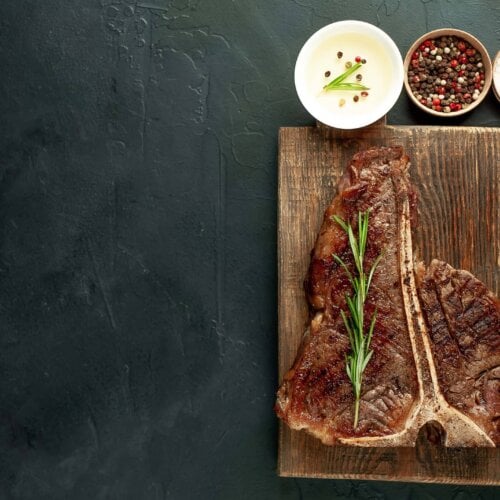
Even if you've pan-seared other steak cuts, tackling the T-bone offers a new set of challenges. Because it's technically two steak cuts in one and because it has a large bone running through its center, it cooks differently than other steaks do.
Fortunately, that doesn't mean it's impossible to learn how to pan sear T-bone steak. With this easy-to-follow guide, you can discover all the tips and tricks you need to know for a successfully seared steak dinner.
T-Bone Steak Pan Searing Tips
Achieve a successful T-bone pan sear with help from the following tips:
Choosing the Right Cut of T-Bone
T-bone steak is available in various quality levels and sizes. For pan-seared T-bone, one of the most important things to look at is size because your steak needs to fit comfortably in your skillet to sear properly. Then, consider quality by noting the steak's labels. Premium Angus, USDA Prime, and Wagyu are top-quality cuts of steak that yield excellent results from pan searing and finishing off in the oven. Opt for T-bone steaks that are at least 1 to 1.5 inches thick. Thicker steaks are better suited for pan-searing because they allow for a nice crust to develop on the outside while maintaining a juicy and tender interior.
Trim and Score the Fat
Trim any excess fat from the edges of the steak to prevent flare-ups during cooking. However, leave some fat on the steak as it adds flavor and juiciness. If the fat cap on the steak is thick, consider scoring it with a sharp knife in a crosshatch pattern. This helps render the fat and enhances the texture of the steak.
Use the Right Size Pan
T-bone steak is quite a bit larger than others, so it's important to use a cast-iron skillet that's large enough to accommodate it to get an even sear. Make sure the steak can lie flat on all edges and that you have enough room to flip it to the other side with tongs easily. If cooking multiple steaks, you may need to sear one at a time to avoid overcrowding your pan.
Check the Temperature with a Thermometer
The best way to ensure an accurate T-bone steak cook is to use a food thermometer. After searing your steak, check the temperature by inserting the probe into the thickest portion. If your steak still needs cooking time, move it into the oven. Check the temperature again before resting. Follow this guideline to ensure your steaks reach the desired level of doneness during the resting period:
| Doneness Level | Description | Remove Steak From Heat Source at | Desired Final Internal Temperature |
|---|---|---|---|
| Rare | Red center, very juicy | 115-120°F / 46-49°C | 120-125°F (49-52°C) |
| Medium Rare | Pink center, warm and juicy | 125-130°F / 52-54°C | 130-135°F (54-57°C) |
| Medium | Pink center, slightly firm | 135-140°F / 57-60°C | 140-145°F (60-63°C) |
| Medium Well | Slight pink center, firm | 145-150°F / 63-66°C | 150-155°F (66-68°C) |
| Well Done | Brown throughout, very firm | 155°F / 68°C or lower | 160°F (71°C) or higher |
Pan Seared T-Bone Steak with Garlic Herb Butter Sauce Recipe

Ingredients:
- 1 1/2 lbs T-bone steak (about 1.5 inches thick)
- Salt and pepper, to taste
- 2 tablespoons olive oil or canola oil
- 2 tablespoons unsalted butter
- 4 cloves garlic, minced
- 1 teaspoon fresh thyme leaves, chopped
- 1 teaspoon fresh rosemary leaves, chopped
- Optional: red pepper flakes for a kick
Instructions:
- Take the T-bone steak out of the refrigerator and let it sit at room temperature for about 30 minutes. This ensures more even cooking.
- Pat the T-bone steak dry with paper towels. Season both sides generously with salt and pepper.
- Heat a heavy-bottomed skillet, preferably cast iron, over medium-high heat. Add the oil to the skillet and swirl to coat the bottom evenly.
- Carefully place the seasoned T-bone steak in the skillet. Let it sear without moving for about 4-5 minutes on one side until a golden crust forms. Use tongs to flip the steak and sear for an additional 4-5 minutes on the other side. Adjust cooking time based on desired level of doneness.
- Reduce the heat to medium-low. Add the butter to the skillet and let it melt. Stir in the minced garlic, chopped thyme, and chopped rosemary. If desired, add a pinch of red pepper flakes for a touch of heat.
- Tilt the skillet slightly and spoon the garlic herb butter sauce over the steak. Continue to baste the steak with the sauce for about 1-2 minutes, ensuring the steak is well-coated and infused with flavor.
- Use a meat thermometer to check the internal temperature of the steak. For medium-rare, aim for an internal temperature of around 130-135°F (54-57°C). Adjust the cooking time accordingly for your desired level of doneness.
- Once the T-bone steak reaches your desired level of doneness, remove it from the skillet and transfer it to a cutting board. Let the steak rest for about 5 minutes before slicing.
- After resting, slice the T-bone steak against the grain into individual portions. Serve immediately, drizzling any remaining garlic herb butter sauce from the skillet over the steak slices.
Pan Seared T-Bone Steak with Garlic Herb Butter Sauce – Nutritional Facts
Per Serving (based on 2 servings, based on a 2,000-calorie daily diet)
| Nutrient | Amount (% Daily Value (DV)) |
|---|---|
| Calories | 580 (29%) |
| Total Fat | 46g (59%) |
| Saturated Fat | 18g (90%) |
| Trans Fat | 0g |
| Cholesterol | 150mg (50%) |
| Sodium | 390mg (17%) |
| Total Carbohydrate | 1g (0%) |
| Dietary Fiber | 0g (0%) |
| Total Sugars | 0g |
| Added Sugars | 0g (0%) |
| Protein | 42g (84%) |
| Vitamin D | 0.3mcg (2%) |
| Calcium | 20mg (2%) |
| Iron | 3.5mg (19%) |
| Potassium | 590mg (13%) |
Summing Up: How to Pan Sear T-Bone Steak
Use this guide the next time you want to enjoy a steakhouse-worthy meal right in your own home. Order T-bone steak online from Chicago Steak Company to get started. Choose between Premium Angus or Wet-Aged T-Bone, either of which are flash frozen and individually wrapped to preserve their freshness and quality en route to your home.

Leave a comment
This site is protected by hCaptcha and the hCaptcha Privacy Policy and Terms of Service apply.