



How to slow-roast prime rib
Our guide to a slow-roasted prime rib for the holiday table.

Smoking is often reserved for ribs or a beef brisket, but the cooking method is one that’s undervalued for things like a beef tenderloin. Beef tenderloin is where the popular filet mignon comes from, cut from the midsection of a cow. It’s not necessarily known for being full of flavor, but that depends on how you cook it — and smoking can certainly boost the flavor ante. What beef tenderloin is known for is its tenderness, which becomes even more prominent when smoked.
Continue reading this guide to learn how to smoke a beef tenderloin. Don’t worry; it’s beginner-friendly.
There are a few things to look for when buying beef tenderloin to make sure you’re getting a quality cut of beef that’s going to give you the best possible outcomes in the smoker.
First, use the general rule of thumb when sizing a beef tenderloin: A ½ pound of tenderloin per person you’re feeding. So, if you plan to feed eight people, you need at least four pounds of beef tenderloin. They’re usually about 5-7 pounds, so you may need to ask your butcher to cut it to the size you need if you don’t want a full one.
Next, consider whether you want an untrimmed or trimmed tenderloin. An untrimmed tenderloin comes with the silverskin and fat included, but it’s often a bit cheaper than a trimmed tenderloin. If you don’t mind removing these parts yourself, you can save a few dollars by buying an untrimmed tenderloin.
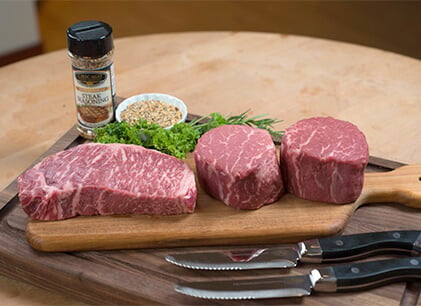
Finally, look at the color and marbling of your beef tenderloin options. A good tenderloin will have plenty of thin white strips of marbling running throughout the meat. The flesh should be a deep, purplish-red hue rather than a lighter pink.

For the best results, prepare your beef tenderloin for the smoker by following these steps.
It’s important to trim beef tenderloin to get rid of unnecessary fat and connective tissue that can affect the final result, potentially reducing flavor and making your tenderloin chewier after smoking. First, look for any fat chunks on the tenderloin's outer portion. Use a sharp knife to carefully remove these chunks of fat before seasoning the meat.
Also, look for the silverskin, a thin layer of connective tissue surrounding beef tenderloin. Slide your knife blade under the silverskin while holding it up with your other hand as you gently pull it away from the meat. Continue until it’s fully removed.

Next, tie the beef tenderloin with butcher’s twine, paying special attention to any narrower pieces of tenderloin. If you have any, tuck them up near the thicker portion of meat before twining. This helps the tenderloin cook more evenly in the smoker rather than overcooking smaller portions of the tenderloin.

Finally, you’ll want to season your beef tenderloin. We recommend starting with a dry brine, which is the process of adding salt to all sides of the meat and letting it rest at room temperature for 30-45 minutes. The dry brining process adds flavor and helps the meat crisp up on the outer edges when cooking.
After dry brining is complete, it’s time to season the beef tenderloin. You can use a mix of seasonings sprinkled along the meat or create a rub. For smoking, a rub is often best, as it covers the entire tenderloin to really allow those smoky flavors to come out. Use your favorite spice rub mixture, or make one of your own. Just be sure your rub covers the entire tenderloin.

There are three essential parts of successful smoking:
These all happen when you take a few minutes to set up your smoker properly.
To monitor your beef tenderloin’s temperature, use one or two smoker probe thermometers. Insert them into the meat before transferring the tenderloin to the smoker so you can check on its temperature throughout the cooking process. Better yet, look for one that connects to a mobile app for easy viewing without needing to open the smoker and release heat.
Adding wood chips to your smoker can enhance the flavor of the meat and help maintain a consistent temperature. However, it’s also important to balance out that heat with moisture to keep your tenderloin moist. Add water to your smoker’s water pan to achieve a good balance.
To create the right amount of heat and keep it consistent, start burning the charcoal in your smoker using a chimney starter. Wait until the charcoal ashes over before moving the tenderloin to the smoker. Keep an eye on the charcoals during the smoking process to ensure that they continue smoking. Adjust the air intake as needed to maintain a good temperature. Opening the vent allows more air in to keep the flames burning, while closing it temporarily can help reduce the heat.
The following smoker tips will lead you to direct success with your smoked beef tenderloin:

As we mentioned, hardwoods like hickory and oak tend to work well for smoked beef tenderloin. They burn longer than other woods, so you’ll get a more consistent, slow-burning smoke from them and probably won’t have to add more wood to the smoker during the cooking process.
With that said, beef tenderloin doesn’t take as long to smoke as other meats do, like a brisket, which can take several hours to cook. Therefore, you’re not as limited with your wood choices for beef tenderloin, so faster burning woods can still work.
For beef tenderloin, we like milder woods, like pecan or maple. However, if you’d prefer to go bold, you absolutely can. In that case, try mesquite or walnut. You can usually get a good idea of what flavors to expect from your wood chips, chunks, or pellets by smelling them before adding them to the smoker. Those with fruitier, sweet notes usually provide lighter flavors, while woodsy and earthy smells typically lean toward bolder flavors.
Once you move your beef tenderloin to the smoker, the process is somewhat hands-off. You shouldn’t need to check on your tenderloin for at least one hour if you have a traditional 4-5-pound tenderloin. This process becomes even easier if you have an app-compatible thermometer that notifies you when your tenderloin reaches 130℉.
However, remember to check the air intake and water pan during the smoking process to maintain consistent heat and moisture in the smoker.
The only other thing you may need to do is wrap the tenderloin in butcher paper, but this is usually only necessary if you plan to cook it past medium-rare. In that case, wrap the tenderloin when it reaches 120-130℉ and allow it to continue cooking to the temperature noted in the chart below, according to your desired doneness level.
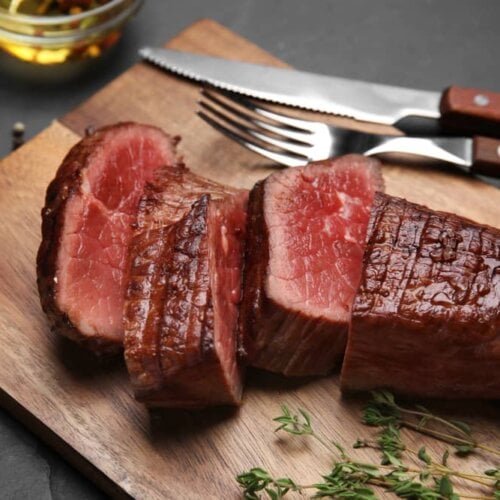
Generally, the internal temperature of a beef tenderloin should reach 130℉, which is ideal for a medium-rare cook. Use a meat thermometer to gauge the temperature accurately. After removing the beef tenderloin from the smoker, allow it to rest for several minutes, during which it will continue cooking and raising the temperature slightly.
Use the chart below as a reference for cooking your smoked beef tenderloin to your desired level of doneness.
| Doneness Level | Temperature to Remove from the Smoker | Final Temperature |
| Rare | 115-120℉ | 125℉ |
| Medium-Rare | 125-130℉ | 135℉ |
| Medium | 135-140℉ | 145℉ |
| Medium-Well | 145-150℉ | 155℉ |
| Well-Done | 155-160℉ | 165℉ |

Once you’re ready to smoke beef tenderloin for yourself, follow this simple recipe below.
If desired, wrap the beef tenderloin in butcher paper once it reaches about 120℉. Or, if you plan to cook the tenderloin past medium-rare, wrap it when it reaches 130℉. This keeps the tenderloin moist as it continues smoking. Be sure also to check the water pan during the cooking process to maintain a good moisture balance in the smoker.
Per Serving (based on 8 servings, based on a 2,000-calorie daily diet)
| Nutrient | Amount (% Daily Value (DV)) |
|---|---|
| Calories | 460 (23%) |
| Total Fat | 33g (42%) |
| Saturated Fat | 12g (60%) |
| Trans Fat | 1g |
| Cholesterol | 120mg (40%) |
| Sodium | 790mg (34%) |
| Total Carbohydrate | 1g (0%) |
| Dietary Fiber | 0g (0%) |
| Total Sugars | 0g |
| Added Sugars | 0g (0%) |
| Protein | 38g (76%) |
| Vitamin D | 0.2mcg (1%) |
| Calcium | 20mg (2%) |
| Iron | 3.8mg (21%) |
| Potassium | 610mg (13%) |
This guide includes all the necessary details for smoking beef tenderloin. If you tried it and find that you love beef tenderloin, you should check out a few other beef tenderloin cooking guides and recipes we offer at Steak University:
And don’t forget to stop by Chicago Steak Company to shop our selection of steaks, seafood, burgers, and more.
Main Course
After trimming the tenderloin, sprinkle salt all over, and leave the tenderloin at room temperature for 45 minutes to brine.
Meanwhile, prepare the smoker. Add the wood chips to the smoker, along with a pan of water. Preheat the smoker to 225℉.
Brush olive oil on the tenderloin. Mix together the onion powder, paprika, cayenne pepper, garlic powder, dried thyme, and crushed red pepper to create a rub. Rub the mixture on all sides of the tenderloin.
Transfer the tenderloin to the smoker and smoke for about 1 ½-2 hours or until the internal temperature reaches 130℉.
Remove the tenderloin from the smoker and rest at room temperature for 10-15 minutes.


Our guide to a slow-roasted prime rib for the holiday table.
Our guide to baking a ham for Christmas dinner.


Leave a comment
This site is protected by hCaptcha and the hCaptcha Privacy Policy and Terms of Service apply.