


How to slow-roast prime rib
Our guide to a slow-roasted prime rib for the holiday table.

You’ve likely heard of rare steak. You know, the kind that’s crisped up on the outside but bright red inside? It’s one of the most controversial ways to cook steak, but for those who love it, they really love it.
But there’s actually a type of steak doneness that’s even rarer than rare, and that’s blue steak. This guide dives into everything you need to know about blue steak, how people enjoy it, and whether it’s worth the hype.
If you’re on TikTok and your algorithm gives you food videos, you might come across lots of videos focusing on blue steak. This steak doneness has recently taken off on the platform, but they’re not a new discovery. In fact, some restaurants have made blue steak a part of their menu for years, and many steak enthusiasts prefer to cook blue steak over rare or medium-rare steak at home.
Blue steak is a term used to describe a steak that is seared at a very high temperature for just 1-2 minutes on each side, leaving the center nearly raw. The outside is quickly seared, creating a crust, while the inside remains tender and cool. This method highlights the meat's natural flavor and juiciness.
Almost anything that you consume raw has some potential safety hazards that come with it. That includes eggs, fish, and even vegetables and fruits. Raw food doesn’t go through a cooking process from start to finish, during which heat can help kill off any bacteria that once resided on the food. Similarly, blue steak never gets cooked all the way through, so you do run the risk of bacteria contamination on the inside portion of the steak that doesn’t get cooked or heated.
However, the same can be true for rare steak, which also has a somewhat uncooked middle. In either case, the most important thing to remember is quality. If you have high-quality steak from a reputable source, it won’t have the same risk of contaminants as a lower-quality steak that hasn’t been handled or stored properly.
Still, while there are ways to minimize your risk with blue steak, there’s no surefire way to prevent all risks if you choose to eat it.
Proponents of blue steak believe that it offers a similar experience to eating a filet mignon. It’s not chewy like you might expect. When cooked properly, it tends to melt in your mouth, requiring barely any chew. If you’re open to new textures and ways to experience food, then trying a blue steak might be something to add to your bucket list.
With that said, if you’re hoping to turn any steak you can buy from your grocer into blue steak, you might be disappointed. Blue steak is something that’s usually best left to the experts, like chefs at high-quality restaurants, who know the best way to cook it and use only the highest quality meats to give you an authentic blue steak experience.
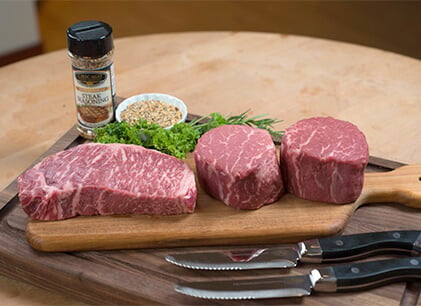
The best steak cuts to use for blue steak are those that are already pretty tender, like tenderloin or top sirloin. Because you spend a very short amount of time cooking blue steak, the cooking process won’t tenderize the steak as it can with other cooking methods, so it’s important to start with a steak that already has a high level of tenderness.
But, as we’ve mentioned, quality is equally as important as the cut of steak. Without a high-quality steak to start, you’ll likely be left with a not-so-high-quality result.
However, what you don’t want is steak with a lot of marbling, like ribeye or Wagyu, as their fat content won’t have enough time to break down during this quick-cooking process. Ultimately, you’d end up chewing your way through tough strips of fat.
Typically, blue steak is only cooked to an internal temperature of about 115 degrees Fahrenheit, max. Some people even prefer to cook to just 90 degrees, but anywhere in this range is acceptable for a blue steak. The key here is to cook the outside of the steak but leave the inside mostly untouched. It’ll warm slightly during the cooking process, but it shouldn’t get a real cook.
Because most restaurants have policies preventing them from cooking a steak like this, you won’t be able to order a blue steak anywhere, which is why it’s more common for fans of blue steak to make their own at home.
Let’s look at how blue steak compares with other doneness levels:
Blue steak requires a high heat source, like a grill or pan on top of the stove, and a small amount of oil. Before cooking it, let it come to room temperature. After removing it from the fridge, salt the steak, and leave it at room temperature for 45 minutes.
Preheat your pan or grill during the last 5-10 minutes of the steak’s resting time. Make sure your grill grates are well-oiled or your pan has a drizzle of oil. Add whatever spices you’d like to your steak before placing it in the pan or on the grill.
Using high heat, sear the steak for just one minute on each side. Each side should get nicely seared in this time, while leaving the middle untouched. If you have a thick steak, be sure to sear the sides of the steak, too, to help seal the entire center.
After reading this, you might never want to try blue steak. It’s understandable, as this level of doneness certainly isn’t a match for all steak fans. But if you’re intrigued and want to give it a whirl, we suggest starting out with steak from the Chicago Steak Company, a company known for its sourcing, aging, and shipping processes that help you get top-quality steaks sent conveniently to your home.


Our guide to a slow-roasted prime rib for the holiday table.
Our guide to baking a ham for Christmas dinner.


Leave a comment
This site is protected by hCaptcha and the hCaptcha Privacy Policy and Terms of Service apply.