


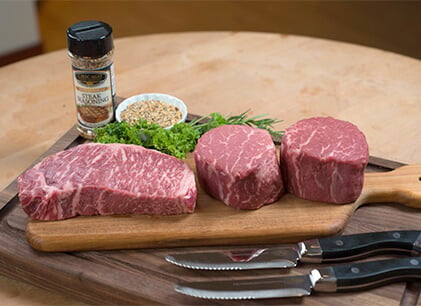

How to slow-roast prime rib
Our guide to a slow-roasted prime rib for the holiday table.

Pork chops are perfectly tasty on their own, but adding breading to their exterior is a good way to bring new flavors to ordinary pork chops. All you need to do to create different flavor profiles is use various kinds of breading or season the breading with different herbs and spices.
Why breading? In addition to the flavor it adds, breading helps crisp up pork chops and offers a protective layer that keeps the inside of each pork chop moist and tender. This guide will explain how to bread pork chops and how to cook breaded pork chops correctly to ensure an even, golden-brown coating with a juicy and flavorful interior.
When choosing pork chops for breading, there are a few important factors to consider.
First is the thickness of the pork chop. Very thin pork chops cook quickly, often quicker than your breading can brown. To make sure you have enough cooking time to crisp up the breading on each pork chop, look for chops that are at least one inch thick. This gives the inside more time to cook, ensuring that it stays tender and moist while you brown up the outside.
Next, consider the differences between bone-in and boneless pork chops. Bone-in pork chops are great for infusing extra flavor into the meat, and they’re usually a bit cheaper than boneless chops. However, boneless pork chops can be a little easier to work with, especially when it comes to serving and cutting pork chops. Either one works for breaded pork chops, so go with whatever you prefer.
Finally, be careful about choosing pork chops that contain lots of fat. Yes, pork fat is delicious. However, it can get in the way of crisping the breading. As fat cooks down, it can create a lot of moisture in the pan and interfere with the breading crisping process.

These tips will set you on the right path toward making breaded pork chops successfully:

To get breading to stick to pork chops, you’ll use the traditional breading method of coating pork chops in flour, followed by egg, and finally, coating them in breading. This process binds the breading to the surface of the pork chops.
Before beginning the breading process, pat the pork chops completely dry, as the natural coating can interfere with the adherence of the bread crumbs. Then, cover a pork chop completely in flour, shaking off any excess flour before placing the pork chop into the egg. Turn the chop so that both sides are covered in the egg. Lift the pork chop from the egg and allow any excess to drip off before transferring the pork chop to the breading. Again, make sure both sides are completely covered.
Work with the pork chops one at a time. Only bread the pork chops just before you’re ready to cook them. Leaving them breaded without cooking them for several minutes can make the breading soggy.

Learn how to make breaded pork chops yourself by following this simple recipe.
Notes
Thick pork chops may need to be finished off in the oven. To do this, heat the oven to 325°F as you cook the chops in the skillet. Place the pork chops on a foil-lined baking sheet after crisping them on both sides, and transfer them to the oven to cook for 10-15 minutes, or until they reach 140°F. Then, rest them as usual, and check that they reach 145°F before serving.
Changing up a recipe for breaded pork chops is easy. Basically, you can use different kinds of bread crumbs, like panko or Italian bread crumbs, or use various seasonings to create other flavor profiles. For example, add some spice with crushed red pepper flakes or cayenne pepper, or use lemon pepper seasoning for a tangy, refreshing flavor.
You now know the technique for breading pork chops and how to cook pork chops once they’re breaded for a crispy-coated exterior and a tender, moist inside. You can use our boneless pork chops to create this dish in your own kitchen. They arrive at your door vacuum-wrapped and flash-frozen to preserve their quality throughout the packaging and shipping process.
Main Course
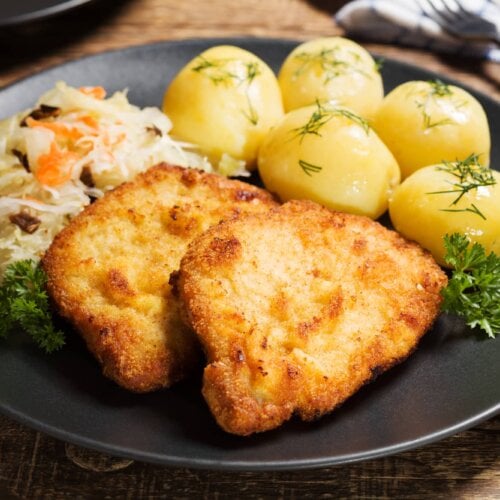


Our guide to a slow-roasted prime rib for the holiday table.
Our guide to baking a ham for Christmas dinner.


Leave a comment
This site is protected by hCaptcha and the hCaptcha Privacy Policy and Terms of Service apply.