



How to slow-roast prime rib
Our guide to a slow-roasted prime rib for the holiday table.

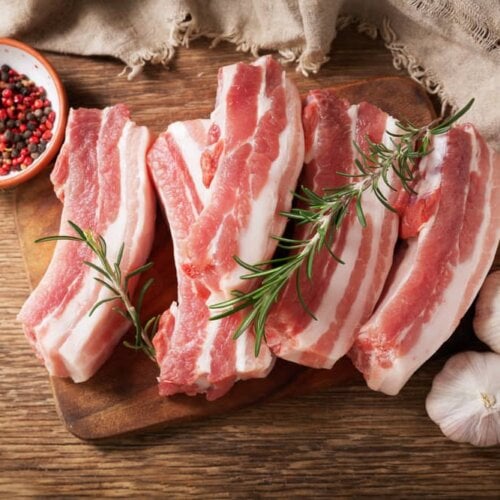
To cook boneless pork ribs in the oven, bake them covered at 325 degrees for about an hour, turning them once halfway through. Then brush them with barbecue sauce and broil them for about 5 minutes, until the sauce caramelizes.
This guide walks you through seasoning, preparing, and cooking boneless pork ribs in the oven. You’ll also get an easy recipe, tips for tender ribs, and how to store leftovers.
Here are the times and temperatures from our recipe at a glance. Every oven runs a little differently, so check the ribs with a meat thermometer.
| Step | Time or Temperature |
| Rest the ribs at room temperature before cooking | 30-45 minutes |
| Oven temperature | 325 degrees |
| Bake, covered with foil | 30 minutes |
| Turn the ribs and bake, covered | Another 30 minutes, or until they reach 130℉ |
| Brush with barbecue sauce and broil, uncovered | About 5 minutes, or until they reach 140℉ |
| Rest before serving | 5-10 minutes |
Despite being called ribs, boneless pork ribs aren’t really from the rib section of a pig. Instead, they usually come from the shoulder area, making them leaner than traditional bone-in ribs that come from the actual rib section. They can also be easier to work with without the hassle of moving around a bone to season or sauce them.
Boneless pork ribs are usually about 1-2 inches thick. They’ve been trimmed entirely of bones and most fat, yet they can be pretty flavorful when cooked properly. They’re also highly versatile because they lack bone, making them usable in various dishes, like barbecue sandwiches, stir-fries, and pasta dishes.
Boneless pork ribs work great in the oven. They don’t take several hours to cook, and they turn out tender when you cook them the right way.
Even if this is your first time cooking boneless pork ribs in the oven, a few tips will help you cook them like a pro.
The most important one to keep in mind is that, like regular bone-in ribs, boneless pork ribs favor low and slow cooking. If you have some time to spare and don’t mind waiting a little longer for your ribs, bump the temperature down to around 300-325 degrees to cook them slower. The end results will be worth it when you bite into a tender, juicy rib.
After the ribs are close to reaching their final temperature, use your broiler to crisp them up. If you want to add barbecue sauce to the ribs, do so before you broil them. Then, broil for just 3-4 minutes to caramelize the sauce and give the ribs a touch of crispiness.
You can also baste your pork ribs with barbecue sauce a couple of times during the cooking process to add flavor and keep them moist.
When they’re done cooking, rest the pork ribs at room temperature for 5-10 minutes. They’ll continue cooking slightly and reabsorb some of their lost liquids during this period.
Let’s spend a few minutes going over how to prepare boneless pork ribs before cooking them.
First, if your ribs are frozen, thaw them completely so they cook evenly. Run them under cold water for about 15-20 minutes to quick-thaw them or place them in the refrigerator overnight if you have more time.
Next, trim extra fat from the ribs. Often, most of the excess fat will be trimmed when you buy boneless pork ribs, but if you see any chunks of fat, remove them with a sharp knife. Large sections of fat typically don’t have enough time to break down during the cooking process.
The next step is seasoning or marinating your pork ribs, which we’ll discuss more in the following sections.
About 30-45 minutes before you cook the ribs, set them on a clean plate or cutting board at room temperature. This lets them warm up so they cook more evenly.

There are two main ways to season boneless pork ribs: keep it simple with salt and pepper, or go all out with a mix of spices. Both ways work.
If you plan to sauce your ribs during or after cooking, it could be best to keep your spices simple by just adding salt, pepper, and maybe a little garlic powder or cayenne pepper for an extra kick. However, if you want the spices to speak for themselves, try a mixture of salt, pepper, cayenne pepper, garlic powder, onion powder, paprika, and Italian seasoning, as we use in our recipe below.
Whatever spices you use, mix them together before adding them generously to all surfaces of the ribs. Remember to get the sides, too, rather than just the tops and bottoms.
There aren’t many ways to change how you cook boneless pork ribs in the oven, but you can change how you flavor them. Our recipe below features just one way to use seasonings, but you can get a completely different flavor profile by using other seasonings or marinades and sauces.
A marinade can be a good way to add flavor and tenderize the ribs a bit before cooking them, which can be helpful if you don’t have extra time to cook the ribs slowly at a low temperature. This marinade for pork steak is an excellent option.
Or, use sauces, like barbecue sauce, teriyaki sauce, or a Hawaiian glaze, to add flavor and moisture to the ribs. You can baste the ribs a few times during the cooking process, but give them a final basting near the end, just before hitting them with high heat from the broiler for a few minutes to caramelize the sauce.

Pork should reach a final temperature of 145 degrees to ensure it’s safely cooked. Try not to go too far past this point, as you could end up with tough and chewy boneless pork ribs. Use the following temperature guide for reference.
| Doneness Level | Final Temperature | Temperature to Remove from Heat |
| Medium rare | 145-150℉ | 140℉ |
| Medium | 150-155℉ | 145℉ |
| Medium well | 155-160℉ | 150℉ |
| Well done | 160℉ | 155℉ |
This simple recipe requires ribs, some seasonings, and barbecue sauce. You can use any sauce you’d like or make your own.
Boneless pork ribs are best served fresh, but it’s completely fine to save leftovers if you have them. In most cases, you’ll want to eat them within one or two days to ensure the best quality and reheat them in the oven or an air fryer rather than the microwave, if possible. Add a small amount of barbecue sauce to them before reheating to bring back some moisture.
Store leftover ribs in the refrigerator in an airtight container or vacuum-sealed bags. Throw unused ribs away after 3-4 days of storage.
Pork can be a little more finicky than steak. It has less wiggle room between cooked just right and overcooked. To help you monitor the cooking temperature, consider using an oven-safe thermometer to keep in the ribs while cooking. You can also make boneless pork ribs in the crock pot or in the air fryer. Don’t forget to check out our other cooking guides and recipes, and keep your favorites bookmarked to return to easily when you’re ready to cook.
Main Course


Our guide to a slow-roasted prime rib for the holiday table.
Our guide to baking a ham for Christmas dinner.


Leave a comment
This site is protected by hCaptcha and the hCaptcha Privacy Policy and Terms of Service apply.