




How to slow-roast prime rib
Our guide to a slow-roasted prime rib for the holiday table.

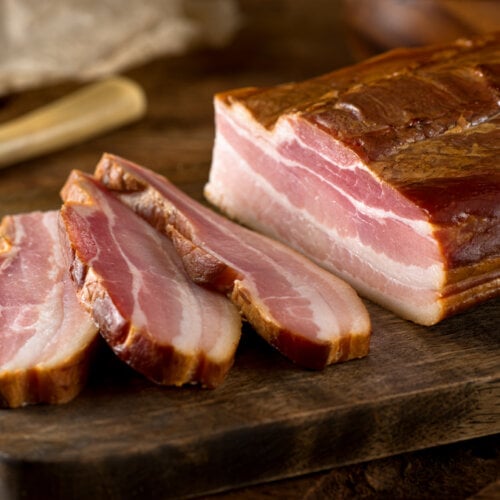
Smoked pork belly is an absolute treat that everyone who likes pork should be able to experience. It’s tender, juicy, and full of so much flavor, just like the bacon that gets cut from it. On the smoker, pork belly picks up the savory flavors of the smoker to deliver even richer tastes.
Learn how to smoke pork belly with this easy-to-follow guide featuring tips, explanations, and a smoked pork belly recipe.
The name “pork belly” gives away any secrecy of this cut. Pork belly literally comes from the belly of a pig, the same cut that most bacon comes from. It’s fatty, of course, but that’s what gives it its unique and robust flavor. You can expect pork belly to come out deliciously tender and juicy when it’s cooked using the right temperature and length of time.
Because pork belly is boneless, it is very versatile when it comes to the dishes it’s used in. Some people like to slice it into bacon, dice it up to top pasta or salads, slice it into thick strips for sandwiches, or enjoy it on its own as thick slices of pork.

Preparing pork belly only takes a few minutes. Your main task here is to remove the layer of skin attached to the pork belly, which many supermarkets leave intact when pre-packaging pork belly. If you order your pork belly straight from a butcher, you can ask for them to remove the skin or do it yourself when you get home. Remember to leave the fat cap alone, as you’ll want this in place when the pork belly cooks to add flavor and moisture.
Next, use a knife to score the fat cap, creating cross-hatch marks about one inch apart. This helps the fat render down and allows your seasonings to reach the meat. Finally, use your choice of seasonings or a dry rub to season the pork belly all over.
Fill the water pan in the smoker and add your wood chips or pellets. See below for some suggestions on the best wood chips or pellets to use when smoking pork belly. Make sure your smoker’s grates are clean and free of debris.
Set the smoker’s temperature to 225 degrees and allow it to preheat for 15-20 minutes.

Smoked pork belly typically favors a mix of sweet and savory flavors. We like to use a dry rub on smoked pork belly, which really shines through the mix of smoking and fat rendering. A dry rub crisps up nicely on smoked pork belly when it combines with the pooled fat from the fat cap.
Here’s a dry rub mixture to consider:
Mix all seasonings together before spreading them along all sides of the pork belly.
Smoking the pork belly takes several hours, so make sure you have plenty of time to spare to complete the process.
To start, place the seasoned smoked pork belly on a grill grate with the fat side up. If your pork belly is too big for one grate, cut it in half and place each piece on its own grate. Smoke the pork belly for 4-6 hours until it reaches 160 degrees. During this time, spritz the pork belly with water or apple cider vinegar once each hour.
Wrap the pork belly in foil or butcher paper and cook for another 1-2 hours or until it reaches 200 degrees. We suggest using a heat-safe thermometer that connects to a mobile app so you can monitor the temperature of your pork belly as it cooks.
That’s it! You don’t need to turn the pork belly or fuss with it too much while it cooks other than remembering to spritz it and wrap it with foil. Setting an alarm or timer can help you remember to complete each task.
Sweet flavors pair well with pork, so sweet woods are some of the best to use when smoking pork. Consider using fruit woods, like apple, pear, peach, or cherry wood chips or pellets. Fruit woods bring some balance to smoked pork belly when combined with the savory flavor of pork and the smokiness of the cook.
If you’re not a fan of fruit woods, don’t worry—there are plenty of other woods that also work well with pork. We love mesquite, hickory, alder, and pecan, for example. But the best way to find the wood that you love best is to experiment with different woods each time you cook pork belly.
Want a few pointers for smoking pork belly before jumping in? We’ve got you covered. Here are some top tips for a successful smoked pork belly:

Try this smoked pork belly recipe with a delicious spice rub blend that boosts its flavor profile.
Per Serving (based on 6 servings, based on a 2,000-calorie daily diet)
| Nutrient | Amount (% Daily Value (DV)) |
|---|---|
| Calories | 610 (31%) |
| Total Fat | 52g (67%) |
| Saturated Fat | 19g (95%) |
| Trans Fat | 0.5g |
| Cholesterol | 85mg (28%) |
| Sodium | 740mg (32%) |
| Total Carbohydrate | 6g (2%) |
| Dietary Fiber | 0g (0%) |
| Total Sugars | 5g |
| Added Sugars | 5g (10%) |
| Protein | 17g (34%) |
| Vitamin D | 0.1mcg (1%) |
| Calcium | 14mg (1%) |
| Iron | 1.1mg (6%) |
| Potassium | 290mg (6%) |
Want more recipes and guides for smoked meat? Check out Steak University, where we share cooking tips and recipes for steak, pork, chicken, and more. Here are a few of our smoked meat guides to start with:
Main Course


Our guide to a slow-roasted prime rib for the holiday table.
Our guide to baking a ham for Christmas dinner.


Leave a comment
This site is protected by hCaptcha and the hCaptcha Privacy Policy and Terms of Service apply.