




How to slow-roast prime rib
Our guide to a slow-roasted prime rib for the holiday table.

Are you looking to branch out your steak cooking with influences of other cultures? If so, hibachi is an excellent next step, especially if you’re already skilled at cooking steak on a grill. Hibachi mimics traditional grill cooking but with a solid, high-heat cooking surface rather than grill grates. By combining the cooking process with authentic Japanese flavors, you can enjoy a delicious hibachi steak meal cooked from your very own kitchen.
Here’s everything you wanted to know about hibachi, what hibachi steak entails, and how to cook hibachi steak yourself.
Although hibachi restaurants in the United States are typically known as fun places to socialize and eat delicious food while being entertained by a part-magician, part-chef, the art of hibachi actually has deep roots in Japanese culture. The word hibachi actually refers to a cooking appliance, similar to a hot plate, that’s heated over charcoal, forming somewhat of a makeshift grill. We tend to refer to hibachi as a style of food, but the term technically derives from the name of this equipment.
However, that term has transformed into a cultured cooking phenomenon during which chefs use a hibachi grill to cook up all kinds of meat, seafood, and veggies while performing jaw-dropping tricks, lighting-fast cuts, and awe-inspiring flips to keep audiences entertained while they wait for their food to be served. Still, not all hibachi restaurants use this form of showmanship; instead, they stick to traditional cooking methods with a hibachi without the optics. In fact, it wasn’t until the mid-1900s that the first entertainment-style hibachi restaurant opened in Japan.
Historically, hibachi food allows the natural flavors of the food to shine, so you won’t typically find your meat and vegetables flavored with tons of seasonings. However, it is common for meat to be marinated or for chefs to add tangy or spicy sauces to hibachi meals to perk up the palate.
Hibachi typically favors boneless cuts that slice well and remain tender, juicy, and flavorful, like sirloin steak, strip steak, or flat iron steak. However, if it’s a steak that you’d typically put on the grill, you can likely cook it hibachi-style.
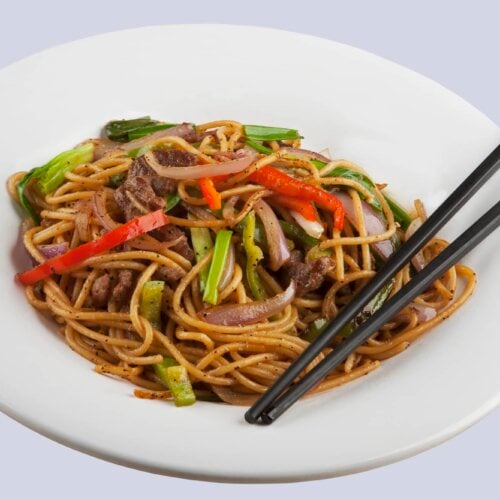
Some chefs even use some lower-quality steaks cut into bite-sized pieces and marinated to enhance their tenderness and flavor when cooking. This is an especially helpful tactic when you’re prioritizing affordability and plan to make a meal that doesn’t require larger cuts of steak, like a steak stir-fry or steak-topped lo mein.
A marinade is one of the most important parts of hibachi steak. As mentioned, hibachi favors natural flavors over extraneous seasonings, so hibachi steak marinades tend to be simple and to the point, allowing the meat’s natural flavors to shine with a little bit of help from key ingredients.
For a good hibachi steak marinade, you’ll need a few spices to add flavor, an oil to help the flavors flow through the meat, and an acid to tenderize the steak. A traditional hibachi-style steak marinade typically uses soy sauce, sesame oil, onion, and garlic, but there are lots of variations you can experiment with.
The key here is to use native Asian-style flavors that you’d usually use in stir-fry, lo mein, sushi, udon, etc. Aside from those we’ve mentioned, you can also lean on mirin, sake, rice vinegar, ginger, honey, sriracha sauce, hoisin sauce, and fish paste.
Although hibachi steak can be enjoyed on its own after you cook it, it’s not uncommon for it to be served or topped with a drizzle of sauce for some added flavor. Here are a few ideas:
This simple hibachi steak recipe is perfect for pairing with fried rice or lo mein noodles.
Our hibachi steak recipe gives you the blueprint needed to make hibachi steak, but it certainly isn’t the only way you can make it. In fact, hibachi steak can have numerous outcomes, depending on the seasonings and oils you use during the cooking process. You can also add other ingredients to your griddle, like onions, fresh minced garlic, or scallions, to infuse additional flavor into the meat while cooking.
Experimentation is key. Instead of ground ginger, use ginger paste for a stronger ginger flavor. Add some rice vinegar to your griddle while cooking the steak for a tangier taste. Or, create an entirely different marinade to change up your steak’s flavor.
Get started on your at-home hibachi steak cooking by ordering steak online from the Chicago Steak Company. We have several boneless cuts of steak, like ribeye, strip steak, and top sirloin, that are ideal for hibachi steak. Or, splurge a little with filet mignon instead. Don’t forget to check out our other steak recipes, too, to bookmark when you need a new meal idea starring your favorite steaks.
Main Course


Our guide to a slow-roasted prime rib for the holiday table.
Our guide to baking a ham for Christmas dinner.


Leave a comment
This site is protected by hCaptcha and the hCaptcha Privacy Policy and Terms of Service apply.