




How to slow-roast prime rib
Our guide to a slow-roasted prime rib for the holiday table.

Roast beef is one of the best comfort foods you can make in your kitchen, but only if you know how to do it right. If you’ve ever had to eat dry roast beef, you know what we mean.
The good news is that roast beef isn’t difficult to master; it’s a matter of knowing how to season the meat so that it’s tasty from the inside out, how to choose the right cut, and how to cook it properly (i.e. slowly and steadily) for tasty, tender results. We’re going to explain how to do all of that in this guide, so get your roasting pan and carving knife ready.
Roast beef is one of those dishes that can only be as good as the quality of the meat you use to cook it. You’ll cook roast beef using low heat over a couple of hours in the oven, but it’s not as forgiving as cooking in a slow cooker or smoker, both of which take several hours of cooking to tenderize the meat. Therefore, starting with beef that’s very lean and not as tender isn’t a great idea for roast beef.
We prefer cuts with a good balance of tenderness and flavor, like top sirloin, bottom round, rump roast, or strip roast. If you can afford to splurge a little, consider a rib roast, which has lots of marbling that cooks down as it roasts, adding flavor to the roast and tenderizing the meat.
Want your roast beef to come out of the oven with restaurant-quality texture and flavor? Here are a few tips to help:
While your roast beef rests, consider making gravy using the leftover beef broth and drippings. First, strain the drippings and bring them to a boil in a saucepan. Then, make a cornstarch slurry using ¼ cup cold water and three tablespoons of cornstarch. Add the slurry to the drippings and whisk the mixture. Allow it to boil for 1-2 minutes, then reduce the heat to low to let it simmer for another several minutes as it thickens. Season with salt, pepper, garlic powder, and a splash of Worcestershire sauce.
Per Serving (based on 6 servings, based on a 2,000-calorie daily diet)
| Nutrient | Amount (% Daily Value (DV)) |
|---|---|
| Calories | 450 (23%) |
| Total Fat | 32g (41%) |
| Saturated Fat | 11g (55%) |
| Trans Fat | 1.5g |
| Cholesterol | 120mg (40%) |
| Sodium | 620mg (27%) |
| Total Carbohydrate | 1g (0%) |
| Dietary Fiber | 0g (0%) |
| Total Sugars | 0g |
| Added Sugars | 0g (0%) |
| Protein | 37g (74%) |
| Vitamin D | 0.2mcg (1%) |
| Calcium | 22mg (2%) |
| Iron | 3.8mg (21%) |
| Potassium | 580mg (12%) |
Use a digital meat thermometer to accurately gauge when your roast beef has finished cooking. Insert the thermometer’s probe into the thickest part of the meat. If you’re cooking to medium-rare, the beef is safe to remove from the oven when it reaches 135°F. If you’d rather cook to medium, keep it in the oven until it reaches 145°F or 150°F for medium-well.
If the outer edges of your roast appear to be cooking much faster than the inside, you can cover the roast with aluminum foil until it finishes cooking. This holds more heat directly against the roast to speed up the cooking process.
Remember to rest roast beef for about 20 minutes at room temperature after cooking it to allow its juices to redistribute throughout the roast. This way, you’ll retain more moisture inside the meat as you carve it.
Next, look for the long lines running through your roast. This is known as the grain of the meat. You’ll want to cut against the grain rather than with it, which breaks up long fibers that can be tough to chew, leaving you with a more tender roast.
Use a sharp carving knife for the job, slicing the roast against the grain into thin strips of meat. Only slice what you want to eat right away; you can always go back and cut more if needed.

If you have leftover roast beef, there’s no reason to toss it. Roast beef usually stores well in the refrigerator for 3-4 days, but you’ll want to make sure you keep as much air out of the meat as possible.
Once the roast has cooled, but within two hours of cooking it, wrap it tightly in plastic wrap, ensuring that no small holes or tears can allow air in. Place the wrapped roast in a shallow dish and store it in the refrigerator, preferably wherever your refrigerator is the coldest.
You can also freeze roast beef. To do this, slice the leftover roast into 2-inch or thinner sections and seal the sections in vacuum-sealable bags to keep them airtight. Store them in the freezer for up to three months.

Roast beef is a versatile, classic dish that pairs well with numerous types of side dishes fit for virtually any occasion, whether you’re having an intimate family meal or a festive holiday feast.
For a hearty and comforting side, consider mashed potatoes or roasted vegetables like carrots, parsnips, and Brussels sprouts. To make cleanup and cooking even easier, you can often cook these veggies in the same pan as the roast, allowing them to absorb the flavors of your roast drippings. For a more indulgent option, try creamy scalloped potatoes or a cheesy gratin. A light, fresh salad with a tangy vinaigrette dressing can also work well with savory roast beef.
Here are a few more side dish ideas to draw inspiration from:
Our recipe and instructions for cooking roast beef call for a boneless roast, which is typically a bit easier to work with and takes less time to cook. However, many roast beef enthusiasts opt for bone-in beef roasts, which is an excellent choice, too, if you have more time to spare with the cooking process. Bone-in roast beef tends to pack in even more flavor. No matter what type of roast beef you choose, make sure it’s a quality cut that’s well within its sell-by date and, preferably, marked as USDA Choice or Prime.
Main Course
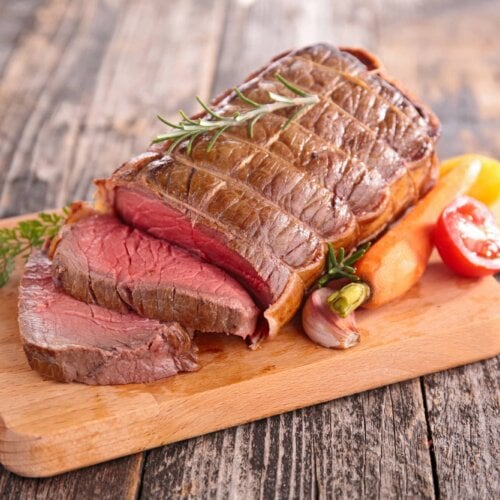


Our guide to a slow-roasted prime rib for the holiday table.
Our guide to baking a ham for Christmas dinner.


Leave a comment
This site is protected by hCaptcha and the hCaptcha Privacy Policy and Terms of Service apply.